Review the Roots • Project 1: Build Me an Atom…. (Protons +, Neutrons Ø, Electrons -)

Matter (the “stuff” of the universe, anything that takes up space* and has mass)

*think “immaterial” that would be a ghost, which takes up no space!

“Atomic Theory” of Matter: Matter is made of atoms

• Intro to Build an Atom Game

To Receive Credit for this Into Project…

__ A. Use information about the number of protons, neutrons, and electrons to

Given the Symbol/Name of one Element on the Periodic Table of Elements between Helium and Neon,

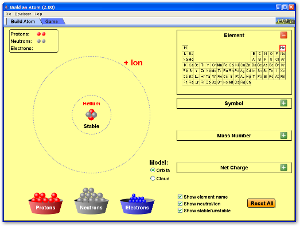
• ___Use Build an Atom to create a Neutral, Stable models of the atoms of those elements

• __ Identify an element and its position on the periodic table

• __ Determine if the model is neutral atom or an ion.

• __Predict how changing the number protons, neutrons, or electrons will change the element, the charge, and the mass of an atom or ion.

__ Extra Credit: On Your Own: __Role the die to get a number between 2 and 10. Using only what you learned from Build An Atom Sim, __ Draw a models that shows correct number, location, and charge of protons, electrons, and neutrons in a neutral stable atom.
  • Matter is made up of Atoms
    (Materials with only one kind of atom are called Elements-You can see all the Elements humans have discovered in the Periodic Table of Elements)
  • Atoms are made up of
    Protons (+ charge),
    Electrons (– charge), and
    Neutrons (ø charge)
Build an Atom

Click to Run

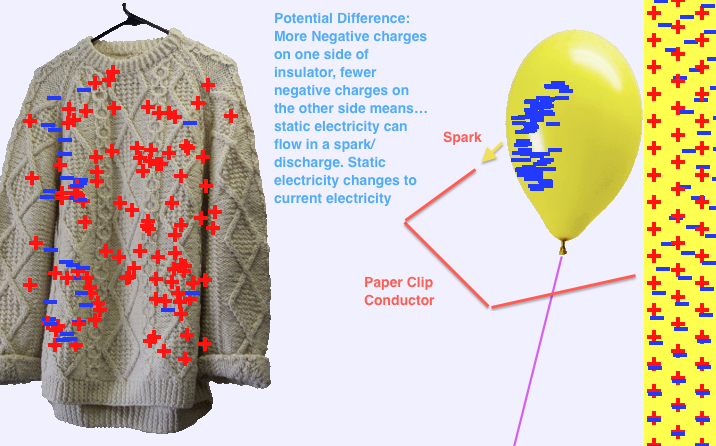
Electro-Magnetic Charges and FORCE Fields

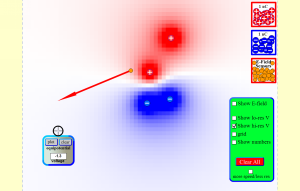
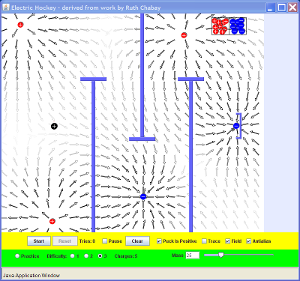
Electro-magnetic Energy can do work (move things over a distance) by pushing or pulling them. Play all levels of the electric hockey game to learn how negative and positively charged particles can be arranged to move matter (the hockey puck).

Electric Field Hockey

Click to Run

* * * * * *

Charges and Fields

+++++++

The greater the difference between negative and positively charged particles, the great the potential for energy flow (Voltage).

———–

Click to Run


Science Interview Project: How Technology Changed Daily Life Over 3 Generations

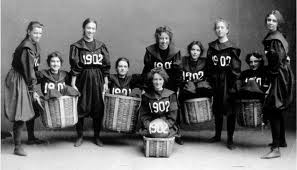
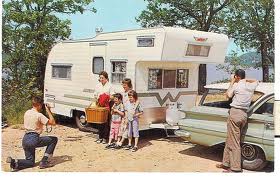
 Family Pictures are best–try to find photos that show the family home or apartment, the family cars, televisions, phones, microwaves, etc.
Here is a link to a Technology Over 3 Generations-2011 questionnaire for 7th or 8th grade science students to use if they choose to do the Winter Break Interview Projects for Science and History credit.
* * * * Directions * * * * *
PRINT OUT the Technology Over Three Generations Questionnaire (also pasted below) and use the questions and charts to interview yourself, a parent (or both parents for extra credit), and a grandparent (or two, three, or four grandparents– for extra credit). If you cannot interview a grandparent please interview another relative or family friend of the same generation. The goal is to interview 3 or 4 generations to see how technology has changed daily life. See “Day in a Life” schedules at end of questionnaire.
[Generation: the average period, generally considered to be thirty years, during which children are born and grow up, become adults, and begin to have children of their own.]
* * * * * * * * *

Science Interview Project: How Technology Changed Daily Life Over 3 Generations

 Family Pictures are best–try to find photos that show the family home or apartment, the family cars, televisions, phones, microwaves, etc.

Here is a link to a Technology Over 3 Generations-2011 questionnaire for 7th or 8th grade science students to use if they choose to do the Winter Break Interview Projects for Science and History credit.
* * * * Directions * * * * *
PRINT OUT the Technology Over Three Generations Questionnaire (also pasted below) and use the questions and charts to interview yourself, a parent (or both parents for extra credit), and a grandparent (or two, three, or four grandparents– for extra credit). If you cannot interview a grandparent please interview another relative or family friend of the same generation. The goal is to interview 3 or 4 generations to see how technology has changed daily life. See “Day in a Life” schedules at end of questionnaire.
[Generation: the average period, generally considered to be thirty years, during which children are born and grow up, become adults, and begin to have children of their own.]
* * * * * * * * *