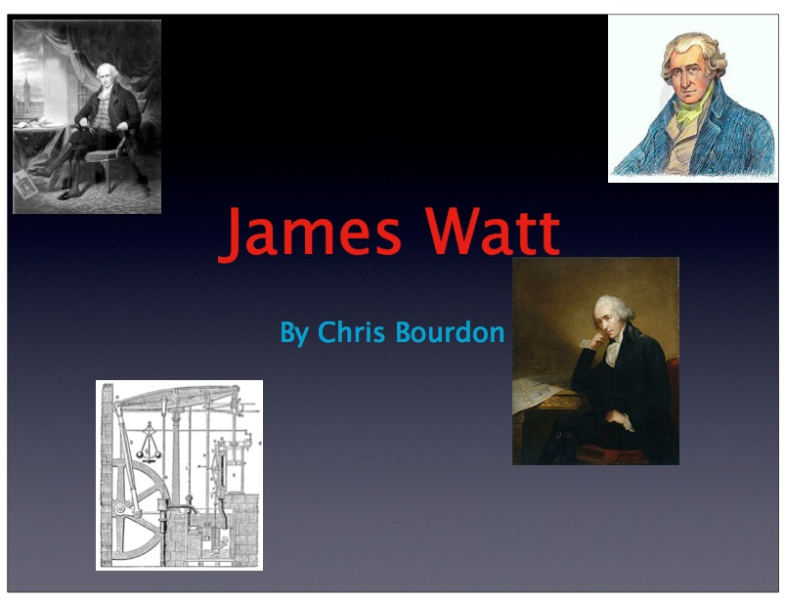
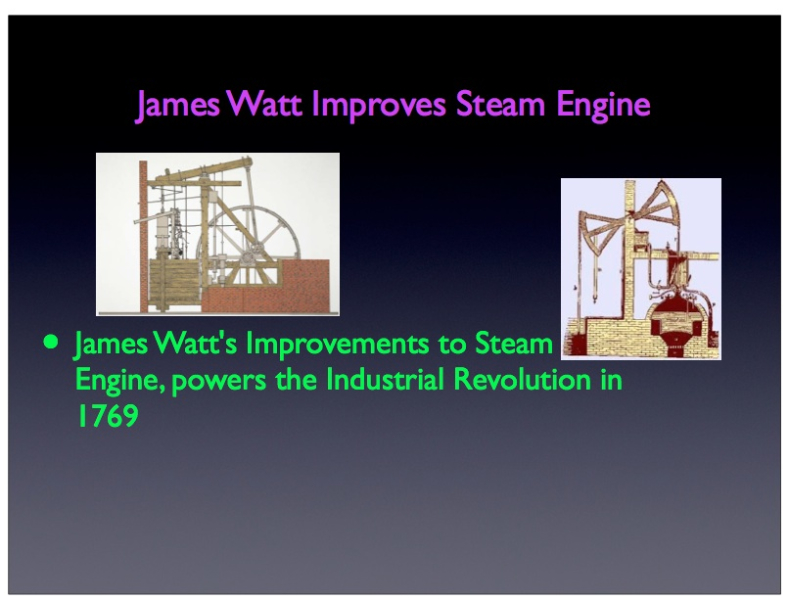
James Watt was a great Scottish engineer of the 18th century. He is one of the most well-known names of the Industrial Revolution. He is credited with some of the most important ideas that lead to inventions of the modern age. He built the first steam engine that could be used for industrial purposes and helped develop engines that run on steam to be used for many different things.
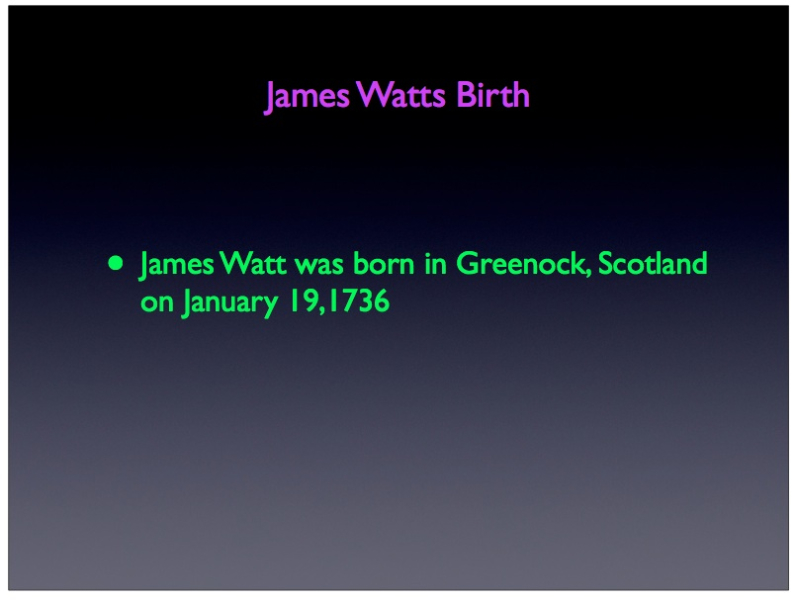
James Watt was born on January 19, 1736 in Greenock, Scotland. He grew up in a fishing village. James was a thin, weak child who suffered from migraines and toothaches. He did not go to school regularly. He enjoyed mathematics in grammar school, and also learned carpentry from his father. His mother came from a distinguished well educated family. His father was a carpenter by training, and built anything from furniture to ships, but primarily worked in shipbuilding. Watt learned about the navigational aids on ships: quadrants, compasses, and telescopes. By his mid teens he knew he wanted to become an instrument maker. Watt’s father had just lost a substantial investment due to a shipwreck, and he could see the benefits of another occupation, so was supportive of Watt’s ambitions. Unfortunately, there were no opportunities for instrument training in Greenock.
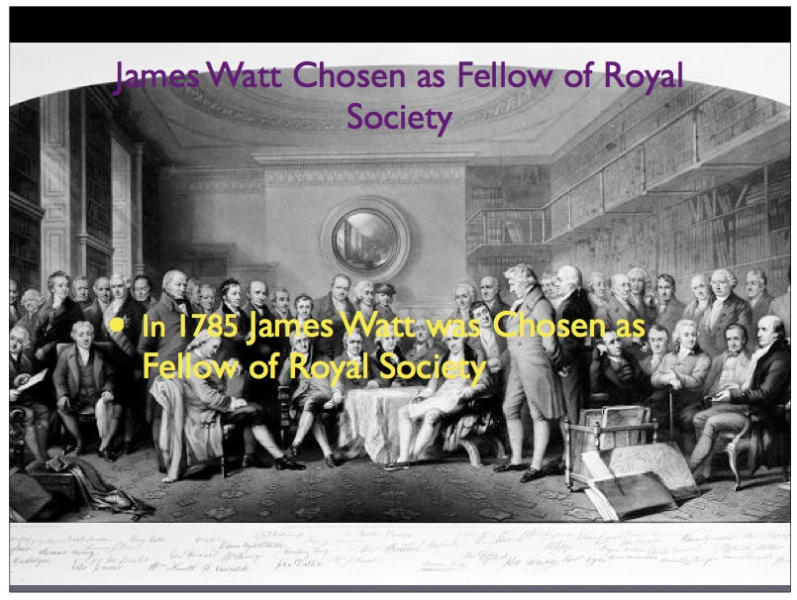
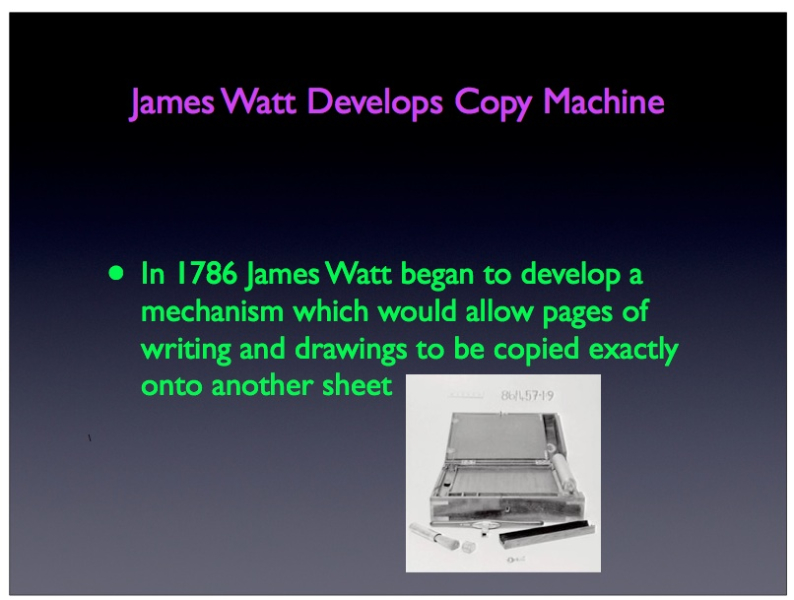
James Watt had many accomplishments in his life. In addition to the Newcomen Steam Engine, he invented the process of duplicating written papers into what is now the copy machine. In 1786, Watt began experiments with chemicals and paved the way for others to invent bleach. Along with mechanical projects, Watt also attempted to work with chemicals. He discovered that chlorine could be produced by mixing manganese dioxide with salt. In 1785 James Watt was chosen as fellow of the royal society.
Demands for his engine came quickly from paper mills, flour mills, cotton mills, iron mills, distilleries, and canals and waterworks. By 1790, Watt was a wealthy man.
James Watt’s work was important because he improved the steam engine by making it smaller, safer and faster. He is also important because we use his inventions today in everyday life, like bleach and the steam engine.
His long-time retirement was saddened by the death of a son, Gregory, by his second marriage, and the deaths of many of his close friends. James Watt died on August 25, 1819 in Birmingham, England. We should remember James Watt because he played a big roll in the industrial revolution.