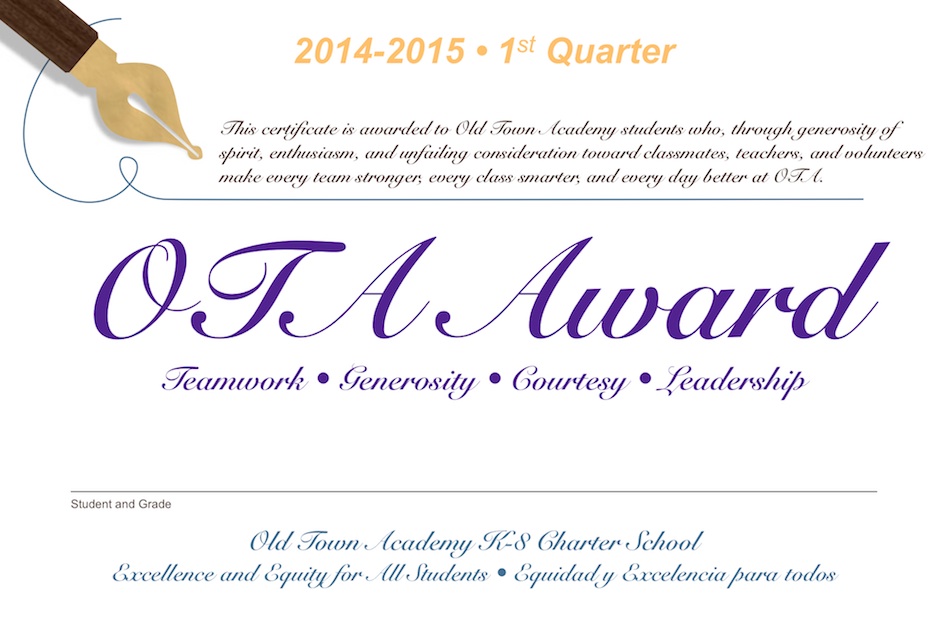
We would like to see every Old Town Academy student aspire to earn this award.
Let’s Get Started…
Dear OTA Teachers and Parents:
Below you will find a link to a great video from KIPP (Knowledge is Power Program) Charter Schools about making Character Education* part of daily life at school …
OTA Teachers willl all be working to incorporate character education into the classroom using the character strengths Report Card and other ideas introduced in this video. Please help us at home!
*The 7 Characters Strengths are character traits most predictive of success in life. Will your student at age 30 have: a fulfilling job? a stable relationship? a role in their community?… based on research of Angela Duckworth, Chris Peterson, Martin Seligman; much of it summed up in How Children Succeed)
Please watch the 13 minute video to learn more from parents, teachers, and students about each character strength, and learn more about how to incorporate the character strengths into your classroom…
6 Keys to Helping Kids Develop Character Strengths
1. Believe It and Model It: We Take Responsibility at OTA for the entire day, for everything that happens on our campus, for every child who grows, or fails to grow. Continue reading
Weekly Class Meetings: (1) Make “Active Learning Zone” Classrooms Possible (2) Support “7 Character Strengths” Education (3) Promote CyberSafety
Weekly Class Meetings
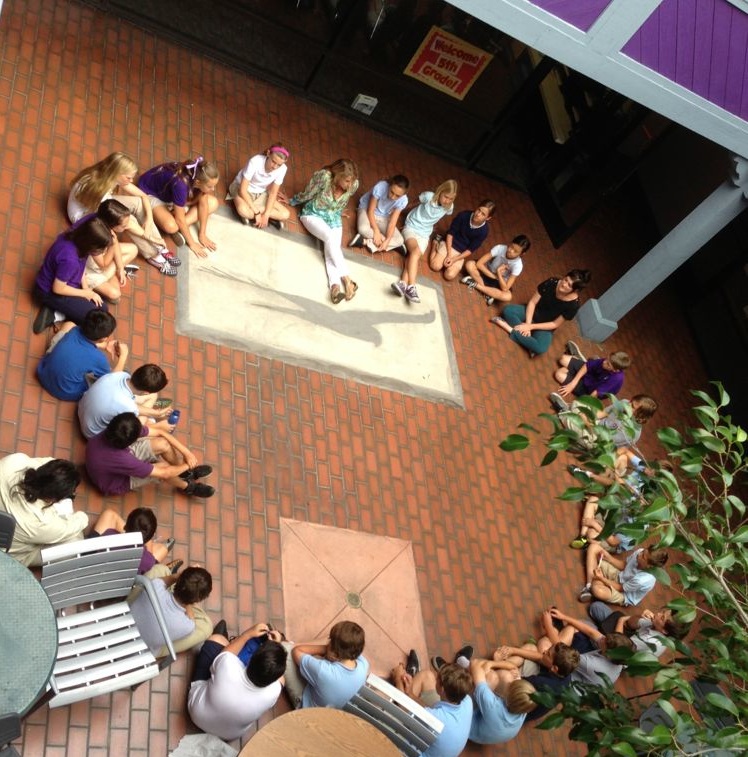
There are many variations on the weekly class meeting but most involve a book in which students write concerns throughout the week (or a box into which they can slip notes). On Meeting Day the teacher invites the students to sit in a circle and then brings up what he or she sees as key issues from the book (without criticizing by name or calling out individuals), and asks for comments and suggestions.
Typical discussion topics might be fairness on the playground, classroom messiness or noise levels, stealth bullying, project due-dates, upcoming class events, etc. The class then discusses issues and makes a plan to deal with each in turn. Weekly progress on concerns brought up in prior meetings are usually discussed; and many teachers begin the meeting with affirmations (“I’d like to thank George for being a good friend on our field trip. He waited for me when I had to go back for my jacket.” See hint on using Gratitude Journals) and apologies (I’m sorry I knocked Sally’s project off the table. I didn’t mean to damage your work.”). The meetings are often very spontaneous and moving experiences and they are very successful at preventing small problem from becoming large problems.
Below, along with stories and more pictures showing what they can accomplish (coming soon), you’ll find three reasons why we believe Weekly Class Meetings are a key component of any school that hopes to have a world-class academic program.
1. Active Learning Zone Classrooms
Maslow’s Hierarchy of Needs in the Classroom (Learn More) Until children are emotionally safe, they are not ready to do their best academically. Developing Active Learning Habits-of-Mind (curiosity, confidence, competence) requires many hours of independent hands-on learning. But children will never develop these habits is they are not willing to take chances (risk public failure), not able to concentrate (because distracted by bullying), not able to express enthusiasm (because they’re afraid of ridicule).
2. Seven Character Strengths
Children who do not feel safe are very unlikely, in other words, to ever develop the character strenghts of Grit, Zest, Curiosity, and so on.
So job one of the Weekly Class Meeting is to uncover bullying, which can often be invisible. Even at a school like OTA where Teachers pledge to lead the entire day and overt bullying is always stopped at once –stealth bullying (whispered name calling, internet comments, etc.) can always arise. The Weekly Meeting helps bring it into the light.
3. CyberSafety – (OldTownAcademy.org/CyberSafety)
Finally, there is a newly intensified Cyber-Bullying threat that all successful schools and classroom teachers wlll have to stay ahead of from now on. Most cyberbullying or destructive websurfing (staying up til 2:30-3:00 AM, consuming hours that could be spent reading, learning, playing, sleeping) is invisible since it happens outside of school; the only way to keep ahead of it is…
- (A) if OTA teachers ask students to share their online experiences every week in a class meeting… and
- (B) if OTA parents meet to share contacts, and share strategies for monitoring online presence and controlling TV-Computers, Texting, Instagram, etc. at home OldTownAcademy.org/CyberSafety
The Court of Virtues | Gratitude & Empathy | USD Character Development Center
Gratitude unlocks the fullness of life. It turns what we have into enough, and more. It turns denial into acceptance, chaos to order, confusion to clarity. It can turn a meal into a feast, a house into a home, a stranger into a friend. Gratitude makes sense of our past, brings peace for today, and creates a vision for tomorrow.” – Melody Beattie, Author
Robert Emmons, a professor of psychology and author of the book THANKS! How Practicing Gratitude Can Make You Happier, states that gratitude is the “queen of the virtues.” That being the case, the “king” of virtues has to be empathy (see February 2013 blog).
The “king” and “queen” oversee a “court of virtues,” such as respect, responsibility, compassion, courage, perseverance, citizenship, self-discipline, gratitude, honesty, trust, and empathy.
We should include in the “courtyard” Martin Seligman’s “character strengths” list:
- Wisdom and knowledge (creativity, curiosity, open-mindedness, love of learning, perspective)
- Courage (bravery, persistence, integrity, vitality)
- Humanity (love, kindness, social-emotional intelligence) Justice (social responsibility, citizenship)
- Temperance (forgiveness and mercy, humility/modesty, self regulation)
- Transcendence (gratitude, hope, humor)
Our homes, schools, communities, and society, should be fostering and promoting these character strengths and virtues among the young; one might make a case for adults as well.
Let’s focus on the “queen and king” –gratitude and empathy.
A Mental Trick from the World’s Best Team New Zealand National Rugby (Video)
…. they devised a tool to fix that, built on a simple two-part frame that describes the mental state you want to avoid, and the one you want to be in. They call it Red Head/Blue Head.
- Red Head is the negative state, when you are heated, overwhelmed, and tense (H.O.T., in the parlance). Your emotional engine is smoking, your perceptions are slow, the game feels too fast, and your decision making is rushed.
- Blue Head, on the other hand, is the precise opposite: the cool, controlled, pattern-seeing state, when you retain your awareness and your decision-making power, when you stay flexible and deliver top performance.
The key is doing three things: Continue reading
7 Character Strengths • Gratitude Journals: A Powerful Tool for Your Classroom | Edutopia
- Hint: Use Gratitude Journals to support the 7 Character Strengths Program: Zest, Grit, Self-Control, Optimism, Gratitude, Social Intelligence, Curiosity…
1. Believe It and Model It: We Take Responsibility at OTA for the entire day, for everything that happens on our campus, for every child who grows, or fails to grow.
2. Name It: Give a name to the intangible traits that make kids strong…
3. See More…
- Hint: Make Gratitude Journals part of Class Meetings (Read out some gratitude notes, before or after Affirmations)
“Would you like to improve the culture in your classroom and your life? Try gratitude. Based on my ten years of teaching experience, this is the most powerful tool that I know.
“Gratitude has empowered me to teach more effectively, appreciate my individual students, grow in my profession, and enjoy life. Utilizing gratitude, I am able to model one of the most important lessons in life, having a positive attitude, especially about the aspects of life that challenge me.
Gratitude Journal: “To get started in your classroom…
The Character Factory – No bad habits!
People who have studied character development through the ages have generally found hectoring lectures don’t help. The superficial “character education” programs implanted into some schools of late haven’t done much either.
Instead, sages over years have generally found at least four effective avenues to make it easier to climb. Government-supported programs can contribute in all realms.
- First, habits. If you can change behavior you eventually change disposition. People who practice small acts of self-control find it easier to perform big acts in times of crisis. Quality preschools, K.I.P.P. schools and parenting coaches have produced lasting effects by encouraging young parents and students to observe basic etiquette and practice small but regular acts of self-restraint. Grace & Courtesy throughout the day. Not even one rude remark or act can go unchecked. No bad habits … from drop-off to pick-up. Recess is Outdoor Education (or mis-Education)
- Second, opportunity. Maybe you can practice self-discipline through iron willpower. But most of us can only deny short-term pleasures because we see a realistic path between self-denial now and something better down the road. Young women who see affordable college prospects ahead are much less likely to become teen moms.
- Third, exemplars… Continue reading
How Children Succeed: Grit, Curiosity, and the Hidden Power of Character | Paul Tough
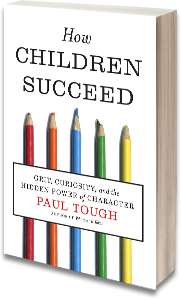 Why do some children succeed while others fail?
The story we usually tell about childhood and success is the one about intelligence: success comes to those who score highest on tests, from preschool admissions to SATs.
But in How Children Succeed, Paul Tough argues that the qualities that matter most have more to do with character: skills like perseverance, curiosity, conscientiousness, optimism, and self-control.
How Children Succeed introduces us to a new generation of researchers and educators who, for the first time, are using the tools of science to peel back the mysteries of character. Continue reading
Meaning Is Healthier Than Happiness
Researchers found that people who are happy but have little to no sense of meaning in their lives — proverbially, simply here for the party — have the same gene expression patterns as people who are responding to and enduring chronic adversity. That is, the bodies of these “happy” people are preparing them for bacterial threats by activating the pro-inflammatory response. Chronic inflammation is, of course, associated with major illnesses like heart disease and various cancers.
“Empty positive emotions” ….. — ”are about as good for you for as adversity,” says Fredrickson….It’s important to understand that for many people, a sense of meaning and happiness in life overlap; many people score ….
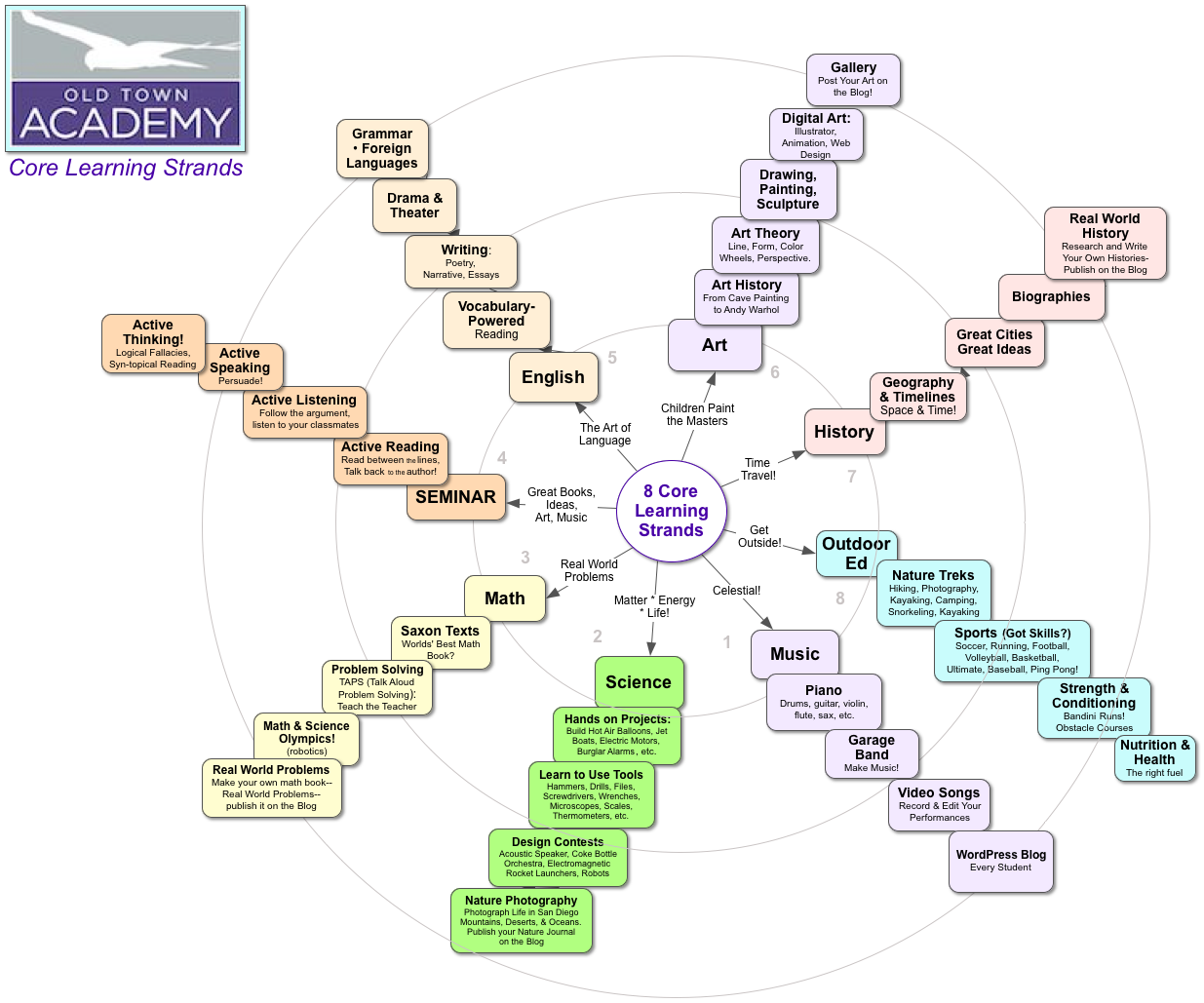
Old Town Academy – 8 Core Learning Strands