Dear Queen Liliuokalani,
My name is Broy McClure and I’m an American. I’m writing this letter inviting you to Old Town Academy. We learned about the annexation of Hawaii. We learned how you revolted two times and that you were overthrown both times. We would like to hear about the annexation of Hawaii from your point of view.
If I had it my way, the Americans should have been given some land and you get some to rule over. I think that it would be a win win for the Americans and the Hawaiians if we shared the land. I learned that American businessmen were the ones who overthrew you and all of your people. They did that so that they could grow some sugar cane. The business men wanted to annex Hawaii so that there was no tax on the sugar cane.
I would like it if you could answer these questions. Will you ever forgive those who overthrew you? What’s one of your biggest accomplishments? If you were given a choice, would you sell your land?
Thank you for reading this,
Broy McClure
Category Archives: History
Splendid little war
Remember The Maine
ΔΩ
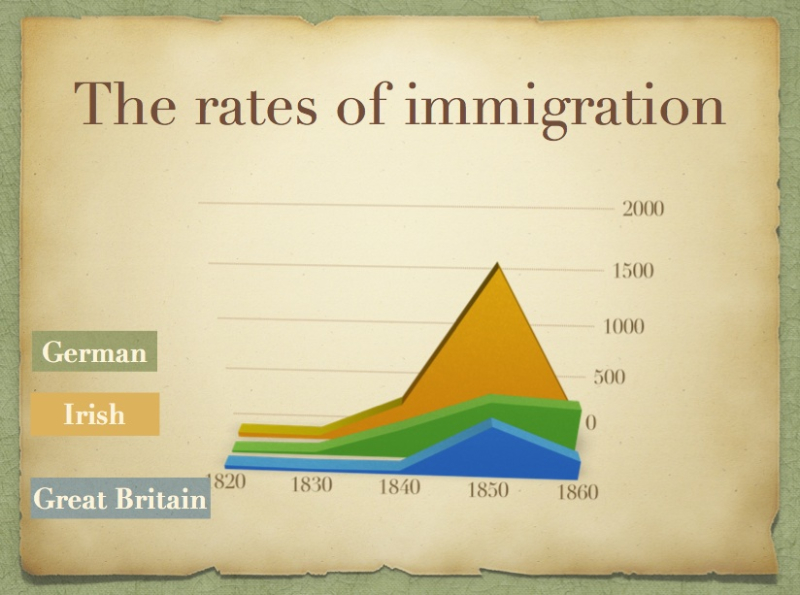
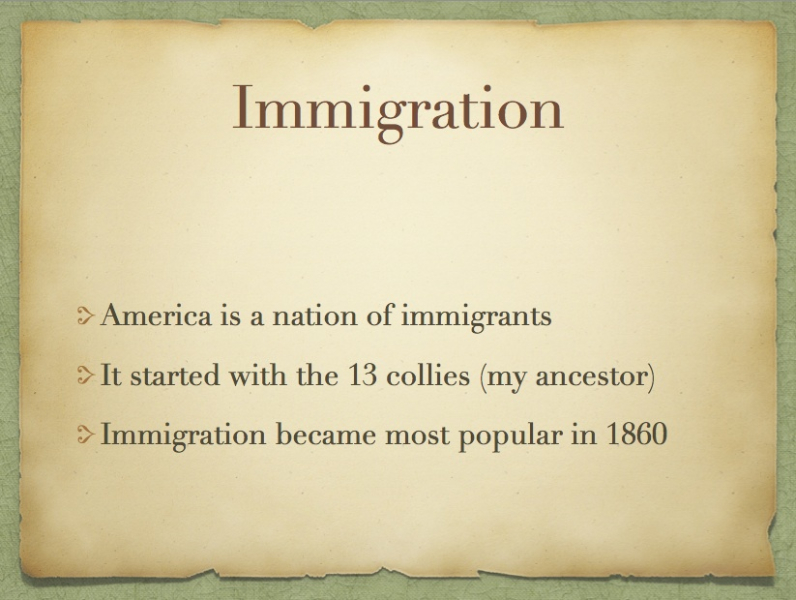
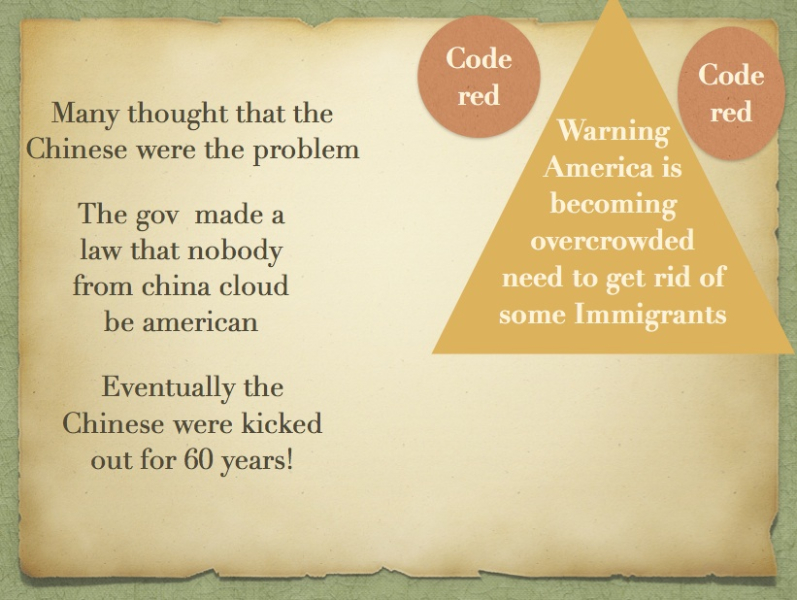
US Immigration Timeline
Teddy Roosevelt Biography
Teddy Roosevelt appreciated world peace and fairness to all; that is why he was one of America’s greatest president. Roosevelt was born on October 27th in 1858 in New York. New York. He grew up sick and with asthma so he was mostly home-schooled. Despite his asthma, he was very energetic and his father encouraged him to get into physical activities which helped him grow up to be a strong person and get into hunting and hiking. He would grow up to be a very important president (v.i.p.). Growing up, he sometimes found himself in a tough spot, but he took responsibility for his actions and did not try to blame others. He once said, “If you could kick the person in the pants responsible for most of your trouble, you wouldn’t sit for a month” Teddy Roosevelt grew up to be an explorer, environmentalist, author, and the most important person in the U.S.A. ( the president(did I forget anything)) . There’s a lot more to this wonderful president than I just said. Let’s just look at some of his accomplishments.
Teddy Roosevelt was named Theodore, but he liked things to be simple, so he was called Teddy. He eventually went to Harvard College and became a magna cum laude graduate in 1880. After that, he enrolled in Columbia Law School an met Alice Hathaway Lee. He married her on his 22nd birthday. He didn’t stay a long at law school because he went to join the New York State Assembly as a representative from New York–he was the youngest person to be in that position. However he wanted more positions so he went to get more positions. He went on to be the captain of the National Guard and the minority leader of the New York Assembly. Sadly his wife and his mom both died February 14th 1884. He was very sad about his wife’s and his mom’s death and did not want to talk about it for the rest of his life. Due to this tragic event, Roosevelt left politics and went to the Dakota territory to become a cowboy.
In 1886 Roosevelt left his ranch due to losing cattle and money, and he decided to move back to New York and continue his work as a politician. Eventually (on a happier note) he married a new wife Edith Kermit Carow on December 2nd 1886. They had 5 children.He became the New York Police Comissioner and worked with President McKinley and the volunteer calvary known as the Rough Riders. He became a war hero in the Spanish American War, and he was given the Congressional Medal of Honor. He became President William McKinley’s vice president, and when McKinley was assassinated in 1901, Theodore Roosevelt became the next president of the United States. He was actually the youngest president the ever was in the United States.
One of the first things he did when he became the president of the USA is that he made the Square Deal. That meant no more monopolies or someone could not own all of the businesses. This protected people from having to pay higher prices for any and allowed for competition to make the most reasonable deal. Big business had to leave some of the equal distribution for other companies. The next thing he did was make the Great White Fleet. This built up the U.S. Navy and its ships as a world power. After that he helped to make the Panama Canal completion which connected the Atlantic to the Pacific Ocean which allowed trade and shipping to go so much faster. He also is one of the few presidents who won the Nobel Peace prize for helping to end the Russo Japanese War in 1906. He worked on Women’s rights and the rights of minorities. He entertained Booker T. Washington at the White House. As I said before,Teddy liked things simple so he was the one who renamed The Presidential Mansion to the White House, and as you know that’s the way it is referred to today. Sadly, he died in his sleep on January 6, 1916 at the age 60.
Teddy Roosevelt was a great president. He gave the White House the name it has today, he changed the economy with the Square Deal. He fought for the rights of peace and wanted rights for all. At the same time, he built up our Navy to protect the United States. All of these accomplishments made him a peaceful protector who suitably was the reason why the teddy bear was named after him. Teddy Roosevelt made a big impact on America.
Compare and Contrast essay
Do you know what Socialism and Capitalism are? Both of these economic systems can be very similar but very different at the same time. Capitalism and Socialism each exist in many countries throughout the world, and there are variations of each of these from country to country. Sometimes politics get tied up into each of these and then it becomes more difficult to tell what kind of system there is. As you read on, we’ll look at the differences and similarities of Socialism and Capitalism, so we can focus on some key ideas.
Let’s start with their differences. Socialism got it’s start with Robert Owen. He believed that the power of a country should fall into the hands of the workers. However, Adam Smith was one who supported Capitalism. He believed in a free market or as he put it a laissez-faire system that emphasized competition in market. In Socialism, every citizen will give their taxes to the government who will fund them with equal housing, medical care, education, and transportation. On the other hand, Capitalism is more competitive. An individual works to become richer for himself, so that he can have better housing, healthcare, and education. In a country with Socialism the emphasis is that all people should be given equal wealth, and they are treated equally. There is no rich or poor; the people all have basic access to life’s basic needs. In a country with Capitalism the emphasis is that you have to compete to be successful. Every person in a capitalist society is expected to try and get the best education and make the most money so that they will have access to the best things in life for themselves and their families. The people of a Capitilist Society do not all have equal access to wealth, education, or healthcare.
Despite all of these differences, they are not completely different. First they are both types of economic systems. They both look at how the economy can be used to benefit the people, and they both can help mankind move forward. In addition, they are found in countries all around the world, and the ideas of each were founded during the Industrial Revolution. Each system uses production of goods to help people live life to the fullest. Both systems have freedom of religion because the emphasis in on economics.They don’t care what your religion is because it doesn’t interfere with the work that you do. Finally, each economic system may have alterations in the country it exists in. For example, the United States is a Capitalist Society but still taxes the people to help pay for the roads and education of all people. Meanwhile Canada is a Socialist country, but the people still may have different levels of wealth and education. These two neighboring countries are just the start of the variations that can be in each type of system.
As you can see, there are a lot of similarities and differences between Socialism and Capitalism. Both are systems in the world that we have today. Socialism is give equal access to the people type of system and Capitalism is about the competition among people. Both of them were founded in the Industrial Revolution and impact wealth, housing, education, healthcare, and transportation. They both effect how much taxes there are, and how many social programs to be around in a country. Many people might think that one of these systems is better than the other. These differences are often why people argue over economics or politics. But the real question is which system do you think is best?
My Timeline on the Industrial Revolution
history talks1
19th century London
During the 19th century London, England was at the very core of the world’s change: the industrial revolution. Inventions were popping up and changing the world, as we know it. The city’s public infrastructures needed to switch out its outfit. Politics had to change as soon as possible because the growing amount of people. Education and laws had to be modified to keep track of the wellness of the people. Even the look of the world was transforming– architecture and clothing were speeding to the future. 19th century London was truly a time and place for things to run a bit differently.
The inventions that came about in the 19th century transformed the city of London from what it was yesterday to what it was going to be. Leading the industrial revolution was Thomas Newcomen’s invention. He created the steam engine that mainly was used to pump coals out of mines faster than animal-powered vehicles could do. Later, James Watt improved on this invention by adding to cylinders to the engine and that made it much more efficient and productive. The Spinning Jenny was another invention that was combined with a Water Frame and produced threads ten times faster than before. Eli Whitney invented the cotton gin, which separated the cottonseeds from the cotton fiber and changed the cotton agriculture by making the cotton production so much more efficient. Jethro Tull invented a seed drill that made the sowing of seeds more resourceful. Inventions were the making of productivity and were the heart of the industrial revolution.
During this time, not only were inventions being made, but also people were improving on the infrastructures of London. The sewage system in London had been so foul that it was dumped right into the river of Thames. The whole city smelled like a sewer. But in to save the day was Joseph Bazalgette who designed a sewer system to take the sewage outside and far away from London. He designed 2,100kms of tunnels to do this impossible task. With this change, the death rate and cholera dropped dramatically because people were no longer getting sick from the sewage. Bazalgette also was a bridge builder, and built several of the city’s bridges to connect the city on both sides of the river.
John Nash was also an engineer who transformed the infrastructure of the city by designing broad avenues in Regents Street, Piccadilly Circus, and transformed Buckingham Palace.
In the early part of the 19th century the first railroad was built from London Bridge to Greenwich. The railway system soon expanded to Paddington Station, Easton Station, Waterloo Station, and King’s Cross Station. This expansion allowed people to get to every part of the city so the industrial revolution could continue to grow. By 1863 underground railways were being built to expand the transportation throughout London. The railways allowed the suburbs to develop and grow the outer areas of London.
Tragedy also brought changes to the buildings. In 1834 the Parliament burnt down and it was replaced in 1859 with the Houses of Parliament and the Clock Tower that included “Big Ben”.
One of the reasons the infrastructure had to change so much was because the population growth. The population grew from 1 million in 1800 to over 6.7 million in 1900. The industrial revolution in London was bringing people from all over the world right into the city. In 1848 tragedy struck Ireland with the great potato famine and over 100,000 Irish immigrants fled into the city. Chinese, Jewish, and South Asian Immigrants came into the city as new factories offered work and a chance at new life.
Several Reform Acts passed in 19th century London to bring more rights to all the people. Early in the century only Royals and the very richest people had rights to vote and influence government. However, the Reform Act of 1832 gave rights to the middle class, but still the working class were not included. A few year’s later The Working Men’s Association made a Charter to try and give all people a say in the government and make voting fair for everyone. During this time, Robert Peel was the Prime Minister. Peel formed the first modern police force in London in 1829. The police were called “bobbies” or “peelers” after him.
Many of the laws created during 19th century London were about child labor. Because the industrial revolution needed so much labor, the factory owners wanted to hire children because they could fit into small spaces and they could easily be cheated from money. This period was notorious for having child labor, and factories and mines were abusing the children. The government saw this, and laws for protecting children and the working conditions were created. Children were now required to go to school for at least two hours each day and not just work in the factories. This was a big change because prior to the law in 1840 only 20% of the children were going to school. After this law, in 1860, 50% of children were going to school.
The adults tried to make their own working conditions better too. But when workers would try to form labor unions to protect their rights. The police often attacked them, and once identified as a union person, they were never able to return to work again, so most workers were fearful of trying to make their jobs more fair.
At the beginning of the century most people went to church one or two times a week. But by the end of the century most people did not go so much. One reason was the work of Charles Darwin. He wrote a book that discussed that people might not have come from God but that they might have evolved over time. This changed people’s feelings about the importance of religion. Another reason for the change in religion was happening was due to the industrial revolution more people were deciding to go into business rather than become clergy.
In the 1840’s greater wealth brought on by the industrial revolution led more attention to fashion. The rich people wore fancy jackets and gowns. Steel hoops, corsette in dresses to make 20 inch waists were the fashion for the rich ladies. Men’s style of clothing was more practical. The way all of this clothing was being supplied was that in 1851 the sewing machine was invented and this led to a mass production of clothing.
As you can see, from steam engines to steel hoops, the industrial revolution changed 19th century London. There was greatness in this time, but there were downfalls in this time. The industrial revolution was on the road to world we have today. Some historians still argue that the industrial revolution might still be continuing today. This period of time changed London from one color to the next.
http://www.history.co.uk/explore-history/history-of-london/what-the-dickens.html
http://en.wikipedia.org/wiki/History_of_London
http://www.oldbaileyonline.org/static/London-life19th.jsp
http://www.britainexpress.com/London/victorian-london.htm
http://mural.uv.es/cehevi/victorianlondon.html
James Watt: A Man of Invention
James Watt was born in Greenock, Scotland on January 18th, 1736. In his early years, he learned about making instruments and was interested in math. Although he was a talented person, he wasn’t always successful. At times, he didn’t have people he needed or the money he needed to see his inventions enter the world he was living in. But this didn’t stop him. Throughout his life, he used patience and opportunity to expand on the inventions that would move the Industrial Revolution forward.
In his mid-teens, Watt knew he wanted to become an instrument maker, but there were no opportunities in Greenock, so he moved to Glassgow. While in Glassgow, he met some of the University’s professors who were impressed with his work and encouraged him to get training. So he set out for London to become an apprentice. But when he arrived in London he had to look for someone who would teach him and most were not willing to shorten the 7-year training. However he found someone who would make his training 2-years. Watt was willing to work extra hours to complete on time, and he returned to Glassgow in 1756 as a trained instrument maker. The Glassgow University professors recognized his good work, and he began to make mathematical instruments for them and repair and service other instruments as well.
It was in this job as a University instrument maker that an opportunity came to
Watt that would forever change his life’s work. One day in 1763 he was given a scale model of a Newcomen steam engine to repair. He found that the model was very inefficient. It wasted ¾ of the steam used. He began to find way to fix this and make it more resourceful. He realized that the cooling of the cylinder was the thing that made it so inefficient. The way he fixed it was that he made a model that used a second cylinder that was not connected to the piston and this allowed the energy made go toward power instead of just reheating the cylinder that was continually being cooled. This was a huge advancement in the way miners could mine faster and keep more coal. It was in 1765 when he discovered his idea would work. There was just one problem; he didn’t have the money or people to make it!
He had a lucky break when John Roebuck, a coal industrialist, agreed to back a full-scale engine. This got Watt started on the building, but there were still problems. The people that Roebuck gave to work for Watt were not skilled ironmakers and their work often had flaws that caused problems for the steam engine. This delayed the building and eventually Roebuck ran out of money and Watt had to become a surveyor for several years. Then in 1773 Matthew Boulton took over the rights to the engine and he brought Watt back to finish the job. This time the workers that he got were the best in the world and this time the invention was successful. In 1776 the Bentley mineing company started using watt’s invention and it was a huge success; soon other mining companies were buying this invention. People all over the world recognized him for his amazing machine!
Although the improvements to the steam engine would be his greatest accomplishment, he made other inventions that were also big success for the industrial revolution. At age 45 Watt invited the next success, the sun and planet gear system. This speed up the piston. He made a double-acting engine; this invention allowed the steam to act on both sides of the piston and made it more efficient. In 1781 he created a compound engine the connected two or more engines. In 1782, he also created the steam indicator which indicated the pressure in the cylinder. It was also at this time that Watt was able to determine the units that a horse could lift and created the measurement system of “horse power.” And today we recognize this great inventor when we use electrical units of power known as “watts”.
Watts became a wealthy man, and he was recognized for his great contributions to the Industrial Revolution. In 1785, Watt and Boulton were elected fellows of the Royal Society. This was a great honor. By 1800, his engine was no longer just being used for mining; nearly 100 mills used his engine for the production of cotton, wheat, wool and flour. At this time, he retired and spent the rest of his life on research work. James Watt died on August 19th, 1819.
Watt’s patience and use of opportunity moved the Industrial Revolution forward in an amazing way. There were a lot of bumps in the road to his success, but Watt made this world a place where production was more efficient, setting a path for future inventors and scientists to use his ideas and transform the world.
James Watt Bibliography
1. http://www.egr.msu.edu/~lira/supp/steam/wattbio.html
2. http://www.bbc.co.uk/history/historic_figures/watt_james.shtml