NOVEMBER 11, 2014
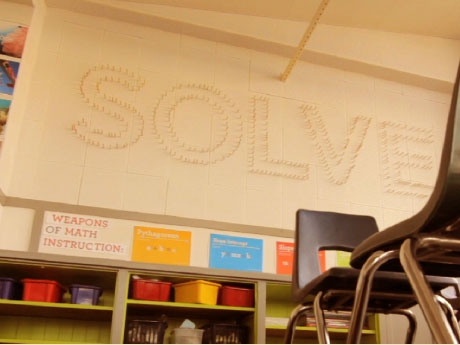
Do you have mystery objects that attract the curiosity of students, leading them to ask questions and that foster meaningful conversations? Is your classroom visually stimulating for the students?
Does it cultivate creativity, and more importantly, is it filled with objects, images and even props that help your students learn, even when they think they’re not learning?
Like most teachers, I decorate my classroom with posters and objects that help promote learning, but that also lend a little pizzazz to an otherwise humdrum learning environment. It is typical, for example, for science teachers to have full skeletons and periodic tables in the classrooms, or for history teachers to have maps and portraits of famous historical figures pinned to the walls. However, the best teaching props are the ones that are not so obvious and that help the teacher reach students in unexpected ways.
Why is that Map Upside Down?
One of my favorite classroom props is the “south up map.” This map is oriented in a way that many would consider to be upside down in that the southern hemisphere is at the top of the map, and east is to the left. Of course, we know that the earth doesn’t have an actual top or bottom, up or down. Students are immediately curious about this map, and more importantly, a teachable moment about history, power, and cultural assumptions can be started in the best way possible, driven by the curiosity of the student.
Another item that provokes conversation is an art object that I purchased at the museum store that consists of a dollar bill enclosed in a cellophane package and priced at 99 cents. From this one prop, I have had countless conversations about money, value, irony, and yes, contemporary art, with students who casually notice it and ask me about it.
Curiosity and Wonder
In short, you want your classroom to be more than just a visual showroom of your particular subject. Here are some suggestions that will help make your classroom into a palace of curiosity and wonder: