Best State for Business? Yes, California

Companies domiciled in California also outperformed the S&P 500 during the past four years by a margin of 23 percent. Among the California industries making the state No. 1 in business are health care, returning 267 percent, consumer staples (302 percent), specialty pharma (235 percent), energy (30 percent) and biotech (333 percent).

Maybe high taxes and strong regulations don’t daunt business leaders if well spent and well aimed. Places that prepare for big 21st-century challenges such as urbanization, climate change and globalization are likely to be the most successful. Continue reading →

Passive Index Funds-Power of Compound Interest (fees)

Assuming an annual market return of 7 percent, he says, a 30-year-old worker who made $30,000 a year and received a 3 percent annual raise could retire at age 70 with $927,000 in the pot by saving 10 percent of her wages every year in a passive index fund. (Such a nest egg, at the standard withdrawal rate of 4 percent, would generate an inflation-adjusted $37,000 a year more or less indefinitely.) If she put it in a typical actively managed fund, she would end up with only $561,000.

Continue reading →

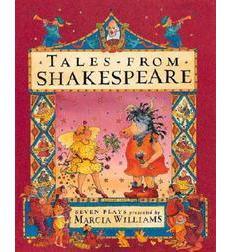
Syntopical Unit: Text 1: Hamlet (Tales From Shakespeare-Marcia Williams) • Text 2: Shakespeare in the Bush

Shakespeare in the Bush

Picks from the Past: August–September 1966

An American anthropologist set out to study the Tiv of West Africa and was taught the true meaning of Hamlet.

By Laura Bohannan

Hamlet
Just before I left Oxford for the Tiv in West Africa, conversation turned to the season at Stratford. “You Americans,” said a friend, “often have difficulty with Shakespeare. He was, after all, a very English poet, and one can easily misinterpret the universal by misunderstanding the particular.”

I protested that human nature is pretty much the same the whole world over; at least the general plot and motivation of the greater tragedies would always be clear—everywhere—although some details of custom might have to be explained and difficulties of translation might produce other slight changes. To end an argument we could not conclude, my friend gave me a copy of Hamlet to study in the African bush: it would, he hoped, lift my mind above its primitive surroundings, and possibly I might, by prolonged meditation, achieve the grace of correct interpretation.

It was my second field trip to that African tribe, and I thought myself ready to live in one of its remote sections—an area difficult to cross even on foot. Continue reading →

How English Spelling Keeps Kids From Learning – The Atlantic

English spelling wasn’t always so convoluted; there was much more rhyme and reason to Old and even Middle English. But the spoken language has evolved, as all languages are wont to do: Pronunciations have changed and foreign words have been introduced, sometimes retaining the spelling conventions of their original languages.

Written English has also evolved—but mostly in ways unrelated to the changes in the spoken language, thanks in part to shenanigans and human error. The first English printing press, in the 15th century, was operated by Belgians who didn’t know the language and made numerous spelling errors (such as “busy” in place of “bisy”). And because they were paid by the line, they sometimes padded words with extra letters; “frend,” for example, became “friend.” In the next century, other non-English speakers in continental Europe printed the first English Bibles, introducing yet more errors. Continue reading →

Geopolitics Seminar: Why China’s Global Supremacy Is Not Inevitable

The country’s strongest asset—its huge size—is also it’s biggest liability.

NOAH SMITH JAN 3 2014, 7:00 AM ET

China’s fast growing economy will enable it to expand its military and diplomatic reach. (Reuters)

China is preparing to surpass the United States as the world’s largest economy, in purchasing power parity terms. Already its economy is 80 percent the size of ours, and if current growth rate differentials persist, it will take China only about four more years to surpass us. At market exchange rates, China’s GDP is smaller, and is expected to remain less than ours until 2028. This is hardly surprising. After all, China has four times as many people as the U.S.; if every Chinese worker were to earn the U.S. minimum wage, its GDP would be larger than ours. That is not a very high bar. With that economic size comes military power and global cultural clout.

via Why China’s Global Supremacy Is Not Inevitable – The Atlantic.

Free Speech Seminar: British Liberty Is Under Threat – The Atlantic

“Free speech is also under attack. ‘Nearly 350 years after us Brits abolished the licensing of the press, whereby every publisher had to get the blessing of the government before he could press and promote his ideas, a new system of licensing is being proposed,’ Brendan ONeill writes. Under this system, people designated as “extremists” would need advance permission from the state to appear on television, publish a blog post, or even send out a tweet.

“These affronts to hard-won civil liberties were mostly adopted in the last 15 years.

“Over roughly the same period, Britain became one of historys most surveilled countries. ‘Studies put the number of operational CCTV cameras at between two and four million, for a population of 60 million people,’ James Bridle explains. ‘The country’s national DNA database holds records on six million people. Telecoms companies are mandated to store logs of all mobile-phone calls and text messages for 12 months, and to make the data available to government at all levels. In many cities, closed-circuit cameras have built-in loudspeakers that allow operators—mainly local government employees—to speak directly to those they see.'”

via British Liberty Is Under Threat – The Atlantic.

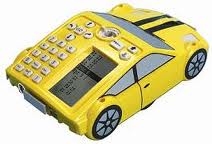
5th Graders Prep for New “Racer” Probots with Seminar on Mystery Program

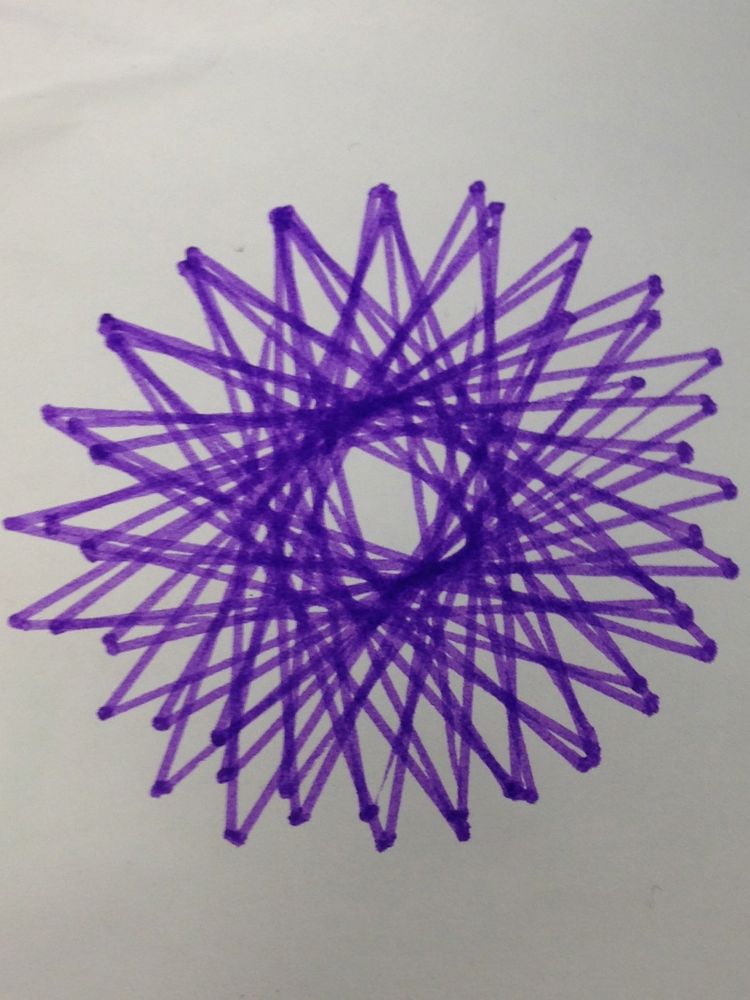
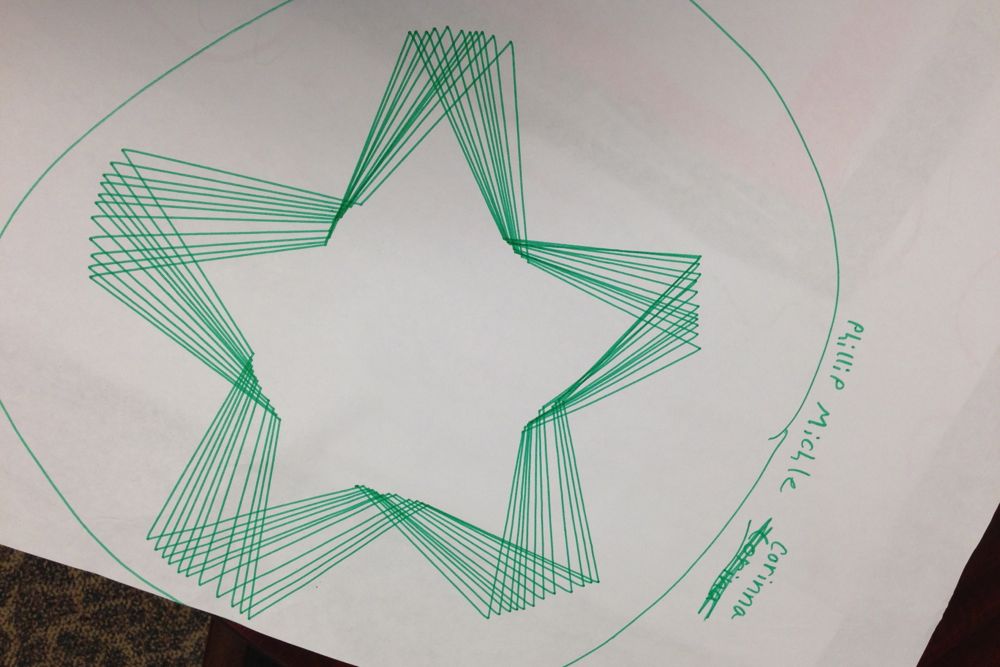
Fifth Graders started back into programming last week with a SEMINAR on a Mystery Program: What symbol, shape, or word will Racer robot draw if you enter this program?

The Seminar Reading is here: Seminar 1: On Programming Robotics.
  • Please ask your 5th graders to explain it to you, line by line.
  • Continue reading to see what Racer robot created! →

*Robotics* Category

OTA Math & Science Olympics! Programming • Applied Mathematics • Problem-Solving

In the ROBOTICS CATEGORY you can post your:

Successful Roamer or Racer Robot programs:

2nd Grade-Programming Robotics

Photos & videos of your Group working with the Racer Robots:

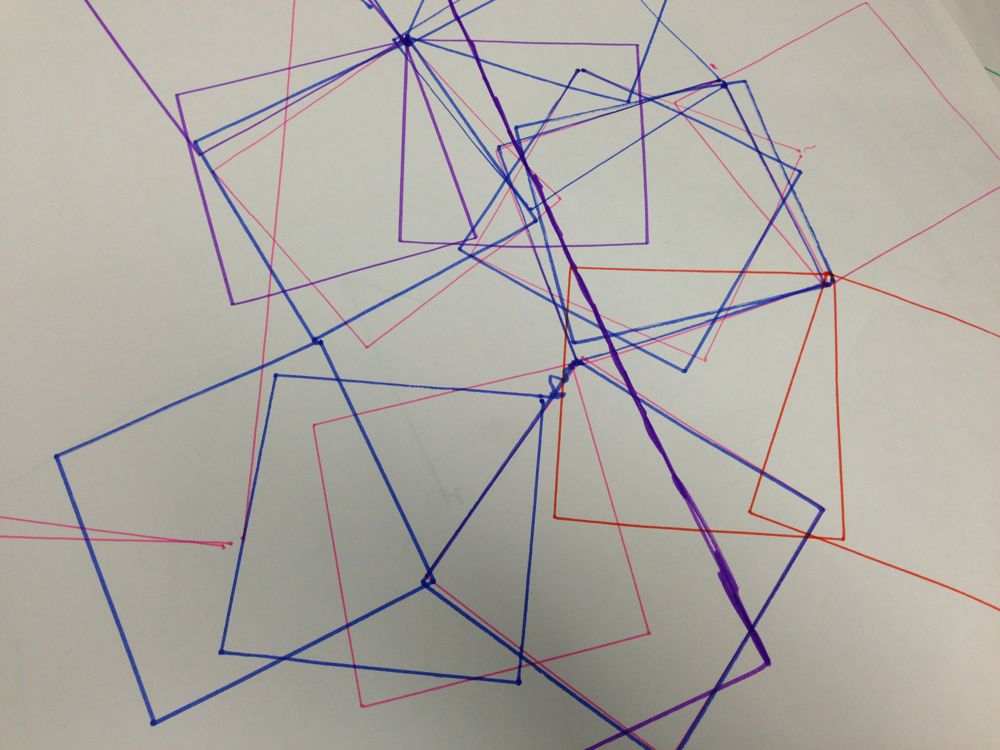
3rd Robotics-Art Squares 2

And samples of your robot-created art:

IMG_4253 IMG_4250 IMG_4259 IMG_4258 IMG_4255


* * * * *

*Music* Category

Music posts go here...

GarageBand recordings, Performance Videos, Music History Timelines;
Song Lyrics, music, or arrangements;
Combined Science-Math-Music Projects (Coke Bottle/Wine Glass orchestra; Build your own guitar, etc.)