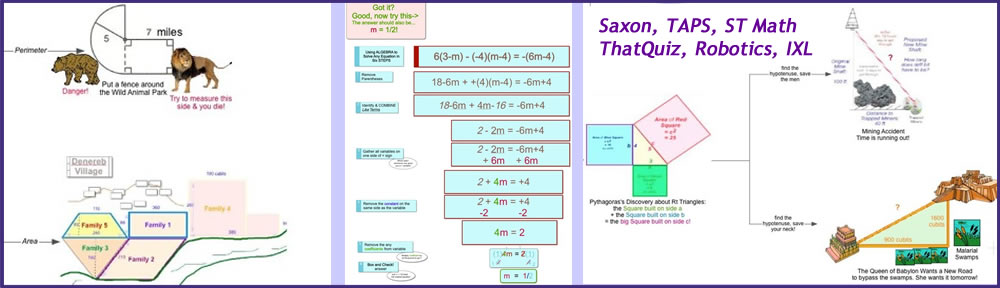
Fun with Dimensional Analysis

Dimensional analysis (also known as the factor-label method or unit-factor method or UNIT ANALYSIS) is by far the most useful math trick you’ll ever learn. Maybe you’ve learned some algebra, but will you use it? For many people the answer is, “not after the final exam.”

For a fraction of the effort needed to learn algebra, you too can learn “dimensional analysis.” First off, however, let’s get rid of the big words. What this is all about is just conversion—converting one thing to another. This is something you will have occasion to do in real life. This is seriously useful stuff.

This trick is about applied math, not about numbers in the abstract. We’re talking about measurable stuff, stuff you can count. Anything you measure will have a number with some sort of “unit of measure” (the dimension) attached. A unit could be miles, gallons, miles per second, peas per pod, or pizza slices per person.

Source: Fun with Dimensional Analysis

Two Sample Problems (see web site for more):

  • Rate Problems: If you are going 50 miles per hour, how many feet per second are you traveling?
    (Sometimes you need to convert both numerator and denominator)…
  • Mixing Problems: How much bleach would you need to make a quart of 5 percent bleach solution? Continue reading →
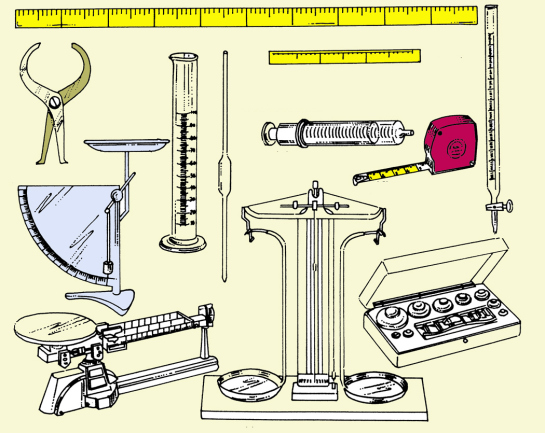
An Argument AGAINST the “illogical” metric system! Richard Nilsen

But when it comes to the arguments for adoption, I demur. No, the metric system is not “more logical” than the so-called English system. And in many ways, it simply fails the test for logic, at least if by logic you mean usefulness.

I admit that when it comes to particle physics and engineering, the fact that you can do a good deal of your math by simply moving a decimal point has a lot in its favor. For the very large and the very small: for astrophysicists and nano-technologists, the 10-based metric system is the logical choice.

But I resent the patronizing tone so many pedants take toward the older system, as if it made no sense at all — when in fact, it makes a great deal of sense. There is a logic to the English system, and one that makes our lives easier — and more human.

Just start with the thermometer. When  Daniel Gabriel Fahrenheit invented the mercury thermometer in 1714, he devised his system of measuring temperature in very human terms. Zero degrees was a cold as he make brine before it froze, and 100 degrees was (he was a little off) body temperature.

And using the Fahrenheit thermometer, when it is 0 degrees F, you know it is cold, and when it hits 100 in the shade, you know you’re hot.

The Celsius, or centigrade system that is used in metric nations, is based on the boiling and freezing points of fresh water. Sounds logical, perhaps, but I’m not water, I’m human. Why should it be considered logical to base your thermometer on water?

via metric system | Richard Nilsen.