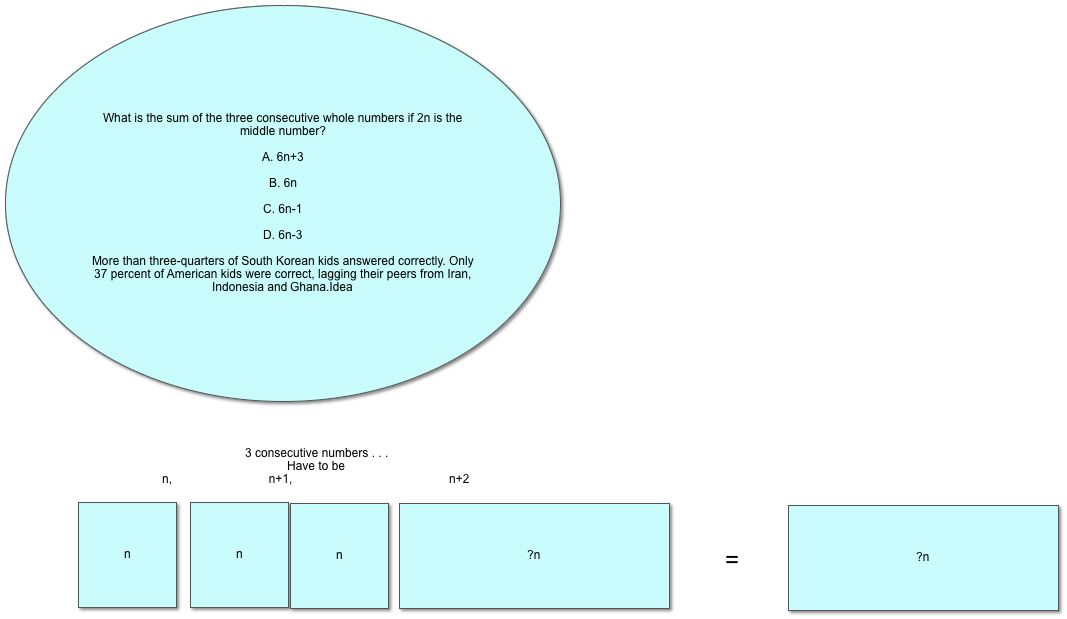
Report from ETS on America’s Skills Challenge
http://www.ets.org/s/research/30079/overview.html
Takahashi quickly became a convert. He discovered that these ideas came from reformers in the United States, and he dedicated himself to learning to teach like an American. Over the next 12 years, as the Japanese educational system embraced this more vibrant approach to math, Takahashi taught first through sixth grade. Teaching, and thinking about teaching, was practically all he did. A quiet man with calm, smiling eyes, his passion for a new kind of math instruction could take his colleagues by surprise. “He looks very gentle and kind,” Kazuyuki Shirai, a fellow math teacher, told me through a translator. “But when he starts talking about math, everything changes.”
Takahashi was especially enthralled with an American group called the National Council of Teachers of Mathematics, or N.C.T.M., which published manifestoes throughout the 1980s, prescribing radical changes in the teaching of math. Spending late nights at school, Takahashi read every one….
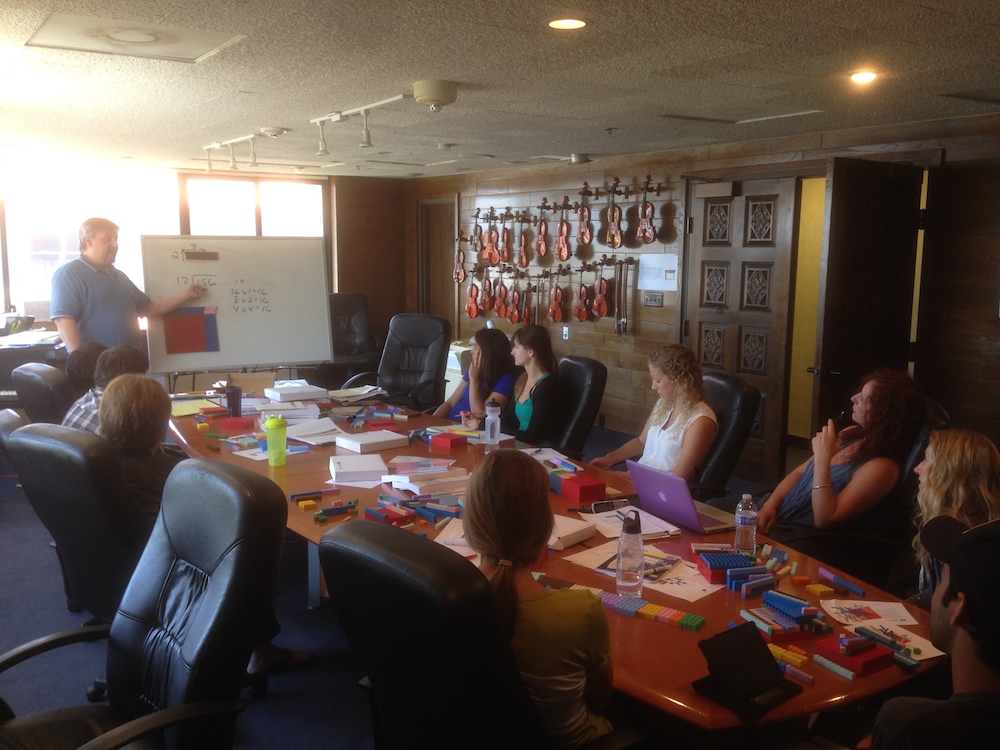
*Math-u-See Training Today at OTA. Math-u-See is a powerful tool that teachers will be incorporating into TAPS Projects (Think Aloud Problem Solving) and classrooms next year.
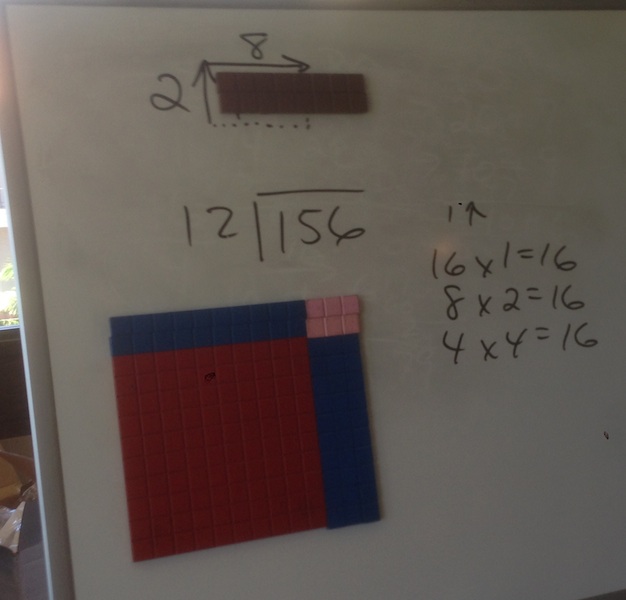
Division problems are Area problems! Given an Area (Dividend) of 16 with a side (Divisor) of 2, find the other side’s dimensions (Quotient). Answer = 8…. W x L = 2 x 8 = 16
Students use ingenious manipulatives to study math concepts and operations as they Build It, Write It, Say It! Students (and Adults^) gain real understanding and see hidden patterns and connections as they study Place Value, Arithmetic Operations at four levels (Counting, Adding, Multplying, Exponents), Fractions, Percents, Algebra and more.
^OTA Parents, Look for “Hour of Math-u-See” Training session which will be offered in August (along with “Hour of Code” Training • “Hour of Piano” • “Hour of ST Math” and many other Parent and Parent-Volunteer Training Courses designed to help you participate in your child’s OTA Lab & Project work at home or by volunteering.
Woodley and his co-author, Elijah Armstrong, ranked 14 IQ tests according to the extent to which they could be solved by applying and re-applying rules. Some tests, like Raven’s Progressive Matrices, ask test-takers to detect complex patterns—but figuring out and reapplying a few simple rules can result in a substantial boost in scores. Other tests, like vocabulary tests, depend on recalled knowledge; they cannot be solved by using rules. (Determining the rule-dependence of tests is the most subjective part of this paper.) When Armstrong and Woodley compared data on the Flynn effect for each of the 14 different IQ tests, their results were striking: The more rule-dependent a test, the more pronounced the Flynn effect—suggesting that the Flynn effect is not due to increases in general intelligence, but to a better ability to short-circuit the test by detecting and applying certain rules
via Rising IQ Scores Don’t Mean Greater Intelligence | New Republic.
Improve at chess – 10 “secret” obstacles
If you are serious about your chess improvement, you should know the top 10 reasons for stagnation:
1) Too much play
2) Incomplete knowledge