Is Music the Key to Success?

By JOANNE LIPMAN

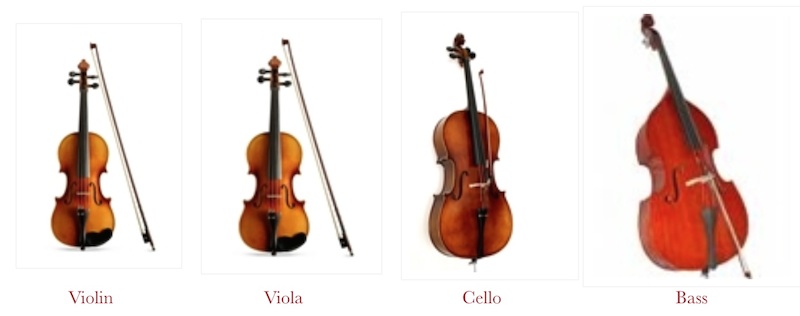
Violin, Viola, Cello, Bass

CONDOLEEZZA RICE trained to be a concert pianist. Alan Greenspan, former chairman of the Federal Reserve, was a professional clarinet and saxophone player. The hedge fund billionaire Bruce Kovner is a pianist who took classes at Juilliard.

Multiple studies link music study to academic achievement. But what is it about serious music training that seems to correlate with outsize success in other fields?

The connection isn’t a coincidence. I know because I asked. I put the question to top-flight professionals in industries from tech to finance to media, all of whom had serious (if often little-known) past lives as musicians. Almost all made a connection between their music training and their professional achievements.

The phenomenon extends beyond the math-music association. Strikingly, many high achievers told me music opened up the pathways to creative thinking. And their experiences suggest that music training sharpens other qualities: Collaboration. The ability to listen. A way of thinking that weaves together disparate ideas. The power to focus on the present and the future simultaneously

via Is Music the Key to Success? 

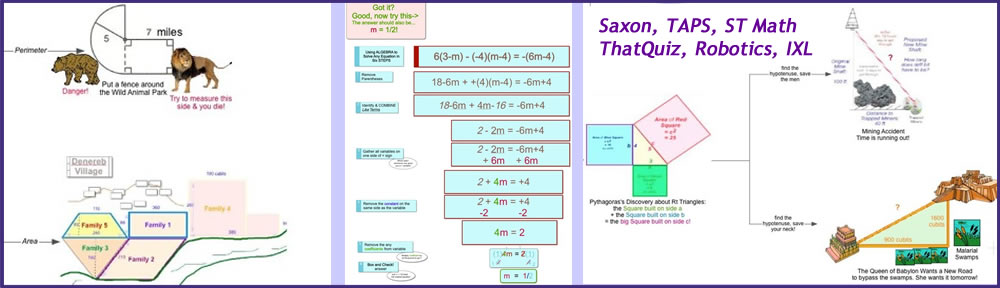
Nine Math Acceleration Tools at Old Town Academy

Click To See ALL Nine Math Acceleration Tools used at OTA:

Math scores went up average of 11% school wide in our first two years… all but two grades are now over 90% advanced or proficient in math, vs. only one class in our first year. In 2013-2014 we added ST Math software to the mix to see if its non-verbal approach to deep understanding can boost scores even higher.

  • 1. Saxon Math Sequence: Incremental progress/continuous review. Why Saxon?
  • 2. Learning Acceleration Math Lab: Thousands of reps with immediate feedback using IXL* (K-3 and 8 algebra) or ThatQuiz* (4th-8th) in the Math Lab + ST Math*.

Click to SEE ALL NINE MATH ACCELERATION TOOLS USED AT OTA

“The Nobel Prize in Physics is Really a Nobel Prize in Math”

“I have deeply regretted that I did not proceed far enough at least to understand something of the great leading principles of mathematics, for men thus endowed seem to have an extra sense.” — Charles Darwin
Mathematics [should not be] about studying boring and useless equations: It is about accessing a new way of thinking and understanding reality at a deeper level. It endows us with an extra sense and enables humanity to keep pushing the boundaries of the unknown. Excerpted From “The Nobel Prize in Physics is Really a Nobel Prize in Math”

“Cognition is Recognition” • Fluid nature of mental Categories: The Man Who Would Teach Machines to Think – James Somers – The Atlantic

Automated Public Turing tests to tell Computers and Humans Apart”), those widgets that require you to read distorted text and type the characters into a box before, say, letting you sign up for a Web site.

In Hofstadter’s mind, there is nothing to be surprised about. To know what all A’s have in common would be, he argued in a 1982 essay, to “understand the fluid nature of mental categories.” And that, he says, is the core of human intelligence.

“Cognition is recognition,” he likes to say. He describes “seeing as” as the essential cognitive act: you see some lines as “an A,” you see a hunk of wood as “a table,” you see a meeting as “an emperor-has-no-clothes situation” and a friend’s pouting as “sour grapes” and a young man’s style as “hipsterish” and on and on ceaselessly throughout your day. That’s what it means to understand. But how does understanding work? For three decades, Hofstadter and his students have been trying to find out, trying to build “computer models of the fundamental mechanisms of thought.”

Continue reading →

*Music* Category

Music posts go here...

GarageBand recordings, Performance Videos, Music History Timelines;
Song Lyrics, music, or arrangements;
Combined Science-Math-Music Projects (Coke Bottle/Wine Glass orchestra; Build your own guitar, etc.)

*Science* Category

Science posts go here…

Lab Projects (photos, diagrams, slideshows, & videos of your completed Projects or Project Exams);
Theory Slideshows and Animated Simulations (Use Keynote to make animations!): Explanations of: How Human’s Hear, How Speaker’s Work, etc;
Science Posters (scan or create digitally);
Combined Science-History Projects (e.g., Inventions Timeline; e.g. History of The: Automobile, Cell Phone, etc.); Combined Science-Math Projects (SONAR math challenges, etc.).

*Language Arts* Category

Language Arts posts go here…

Essays, Narratives, Poems, Speeches, Recitations (videos or recordings), Grammar Projects, Foreign Language Study, etc.
Combined Language Arts-Math Projects (Math poems or songs); Combined Language-Arts History Projects (Biographical Narrative, Poltical Speech, etc.)

*Seminar* Category

Seminar posts go here….

5Ws Charts (Who wrote/painted/composed the reading/artwork/musical piece? What was the title/genre? Where & When was it created? Why was it created? Identify two crucial sentences, elements, or melodies);
Combined History-Seminar Projects (Timelines: Great Ideas, Great Authors; Essays, Mock-Trial Readings: Fact Patterns, MindMap of Foundation Documents: Declaration of Independence, Bill of Rights, etc.).

*Art* Category

Studio-Art History posts go here…

Paintings, drawings, sculptures (scan or photograph);
Art history Slide shows & timelines; Combined Art-History Projects (Timeline linking art genres with political and religious events, etc.)
Digital art, animation (illustrator, keynote, etc.).

Posted in Art

*History* Category

History, Geography, and Civics/Mock Trial posts go here…

Real-World History (research and write your own history); Biographies;
History Timelines; Great Cities-Great Ideas: Maps, Models of Cities/Buildings (SketchUp), MindMaps (Inspiration) of Ideas That Last.
Combined History-Science Projects (Great Inventions Diagrams/Reports, Interviews: Effect of Technology on 3 Generations, History of San Diego, etc.),
Mock Trial Presentations (video or text): Opening Statement, Cross Examination Closing Statement, etc.