

* * * * * * * * *

What is Seminar? “Discussions that we run…”
“Touchstones classes have discussions that we run, that help us feel good about ourselves, get us to think about what’s important to us, help us work together as a group and listen to other kids’ opinions even when we don’t agree or even don’t like them— the kids I mean. But we respect them for saying what they think, and we get to say our ideas and why we believe them. These classes really make you think hard. By the end of the year, the teacher was just another person in the discussion.”
— High school student (Albuquerque, New Mexico).
SEMINAR isn’t like other classes. First, because your teachers are some of the most famous and influential authors, thinkers, leaders, painters, scientists, musicians, and mathematicians who ever lived. Second, because they are usually dead. And since they aren’t there to explain their works, no one in the room will have the final, or right, answer to questions about their books or paintings or songs or ideas. So it’s up to all of us to work together to discover things we might never discover on our own…
Continue Reading : Seminar Introduction • Seminar Hints
“Never trust anyone posing as a tour guide.”
Never trust anyone posing as a tour guide. Learning things is hard. Do the work.
— Ta Nahesi Coates
“When puzzled, it never hurts to read the primary documents—a rather simple and self-evident principle that has, nonetheless, completely disappeared from large sectors of the American experience.”
— Stephen Jay Gould
DRAFT: 3 Levels of Literacy: Phonetic, Lexical, Cultural (Conceptual)
There are Three Levels of Literacy:
- 1. Phonetic Literacy
- 2. Lexical Literacy
- 3. Cultural Literacy
Pace Hirsch, who only seems to recognize 1 and 3…
Write up notes on this… in Cultural Literacy book
Syntopical Unit (Level 4 Reading: Many Sources on One Topic) • School Uniform Policies
“Talk Back to the Books“: Highlight, Underline, Take Notes— Analyze each article by making a Slash/Recall Diagram or Mind Map or Outline —
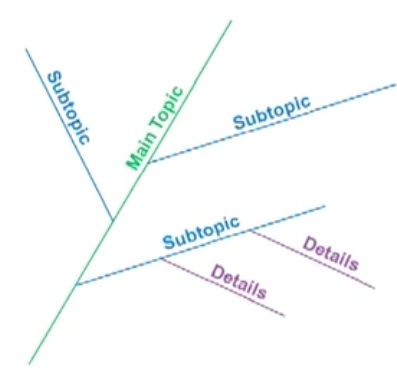
Level 1: Make a Slash-Recall Diagram as You Read
Level 4 is College-Ready Reading. Your Job is to Read and Understand Every Article:
- Level 1 Reading: Analytic: Break article down into main arguments & evidence;
- Level 2 Reading: Synthetic: Put arguments back together in your own words;
- Level 3 Reading: Critical: Weigh them up, critique them for evidence & consistency;
- Level 4 Reading: Syn-Topical: come up with your own conclusion/s or opinion/s on School Uniforms based on all the arguments and evidence you’ve encountered …
All that’s left then is to use that new opinion to inform your actions in life….If you’re starting a school, if you’re a teacher or a student, how will these articles change your behavior? if you’re wise you might test your conclusions against experience* (link to Empiricism post) before you set it in stone.


Downloadable PDFs for Seminar (5 Texts):
(run these through Dale Chall 1 side with underlined)
How Strictly Should a School Uniform Policy Be Enforced?
- Strict uniform policies a ‘monumental waste of time’
- Can Schools be too strict on uniform?
- Do strict behaviour policies at academies really make for happy schools?
Benefits of Uniforms: Do They Improve Academic Performance?
OTA Uniform Policy Links
Web Links of Original Articles
(Great for the Comments Section–what do the people say?)
- Do strict behaviour policies at academies really make for happy schools?
- Strict Uniform Policies A ‘Monumental Waste of Time’
- Can Schools Be Too Strict on Uniform? (Teachers View)
- No Uniform Solution-Uniforms Make Kids Safer Not Smarter
How About Adult Dress Codes? To see the Dress Code at a downtown San Diego Night Club…. Continue reading
Best State for Business? Yes, California
Companies domiciled in California also outperformed the S&P 500 during the past four years by a margin of 23 percent. Among the California industries making the state No. 1 in business are health care, returning 267 percent, consumer staples (302 percent), specialty pharma (235 percent), energy (30 percent) and biotech (333 percent).
Maybe high taxes and strong regulations don’t daunt business leaders if well spent and well aimed. Places that prepare for big 21st-century challenges such as urbanization, climate change and globalization are likely to be the most successful. Continue reading
Passive Index Funds-Power of Compound Interest (fees)
Assuming an annual market return of 7 percent, he says, a 30-year-old worker who made $30,000 a year and received a 3 percent annual raise could retire at age 70 with $927,000 in the pot by saving 10 percent of her wages every year in a passive index fund. (Such a nest egg, at the standard withdrawal rate of 4 percent, would generate an inflation-adjusted $37,000 a year more or less indefinitely.) If she put it in a typical actively managed fund, she would end up with only $561,000.
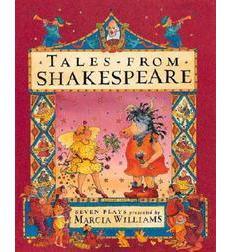
Syntopical Unit: Text 1: Hamlet (Tales From Shakespeare-Marcia Williams) • Text 2: Shakespeare in the Bush
- http://www.amazon.com/Tales-Shakespeare-Marcia-Williams/dp/0763623237
- http://www.naturalhistorymag.com/picks-from-the-past/12476/shakespeare-in-the-bush
Shakespeare in the Bush
Picks from the Past: August–September 1966
An American anthropologist set out to study the Tiv of West Africa and was taught the true meaning of Hamlet.
By Laura Bohannan
Hamlet
Just before I left Oxford for the Tiv in West Africa, conversation turned to the season at Stratford. “You Americans,” said a friend, “often have difficulty with Shakespeare. He was, after all, a very English poet, and one can easily misinterpret the universal by misunderstanding the particular.”
I protested that human nature is pretty much the same the whole world over; at least the general plot and motivation of the greater tragedies would always be clear—everywhere—although some details of custom might have to be explained and difficulties of translation might produce other slight changes. To end an argument we could not conclude, my friend gave me a copy of Hamlet to study in the African bush: it would, he hoped, lift my mind above its primitive surroundings, and possibly I might, by prolonged meditation, achieve the grace of correct interpretation.
It was my second field trip to that African tribe, and I thought myself ready to live in one of its remote sections—an area difficult to cross even on foot. Continue reading
How English Spelling Keeps Kids From Learning – The Atlantic
English spelling wasn’t always so convoluted; there was much more rhyme and reason to Old and even Middle English. But the spoken language has evolved, as all languages are wont to do: Pronunciations have changed and foreign words have been introduced, sometimes retaining the spelling conventions of their original languages.
Written English has also evolved—but mostly in ways unrelated to the changes in the spoken language, thanks in part to shenanigans and human error. The first English printing press, in the 15th century, was operated by Belgians who didn’t know the language and made numerous spelling errors (such as “busy” in place of “bisy”). And because they were paid by the line, they sometimes padded words with extra letters; “frend,” for example, became “friend.” In the next century, other non-English speakers in continental Europe printed the first English Bibles, introducing yet more errors. Continue reading
Reporters Without Borders publishes its 2014 World Press Freedom Index. U.S. falls 13 places

Reporters Without Borders publishes its 2014 World Press Freedom Index. U.S. falls 13 places
via Reporters Without Borders publishes its 2014 World Press Freedom Index. U.S. falls 13 places.
Geopolitics Seminar: Why China’s Global Supremacy Is Not Inevitable
The country’s strongest asset—its huge size—is also it’s biggest liability.
NOAH SMITH JAN 3 2014, 7:00 AM ET
China’s fast growing economy will enable it to expand its military and diplomatic reach. (Reuters)
China is preparing to surpass the United States as the world’s largest economy, in purchasing power parity terms. Already its economy is 80 percent the size of ours, and if current growth rate differentials persist, it will take China only about four more years to surpass us. At market exchange rates, China’s GDP is smaller, and is expected to remain less than ours until 2028. This is hardly surprising. After all, China has four times as many people as the U.S.; if every Chinese worker were to earn the U.S. minimum wage, its GDP would be larger than ours. That is not a very high bar. With that economic size comes military power and global cultural clout.
via Why China’s Global Supremacy Is Not Inevitable – The Atlantic.
Free Speech Seminar: British Liberty Is Under Threat – The Atlantic
“Free speech is also under attack. ‘Nearly 350 years after us Brits abolished the licensing of the press, whereby every publisher had to get the blessing of the government before he could press and promote his ideas, a new system of licensing is being proposed,’ Brendan ONeill writes. Under this system, people designated as “extremists” would need advance permission from the state to appear on television, publish a blog post, or even send out a tweet.
“These affronts to hard-won civil liberties were mostly adopted in the last 15 years.
“Over roughly the same period, Britain became one of historys most surveilled countries. ‘Studies put the number of operational CCTV cameras at between two and four million, for a population of 60 million people,’ James Bridle explains. ‘The country’s national DNA database holds records on six million people. Telecoms companies are mandated to store logs of all mobile-phone calls and text messages for 12 months, and to make the data available to government at all levels. In many cities, closed-circuit cameras have built-in loudspeakers that allow operators—mainly local government employees—to speak directly to those they see.'”
Question the Author (QtA) Strategy for Seminar Students
Question the Author
Questioning the author is a strategy that engages students actively with a text. Rather than reading and taking information from a text, the QtA strategy encourages students to ask questions of the author and the text. Through forming their questions, students learn more about the text. Students learn to ask questions such as: What is the author’s message? Does the author explain this clearly? How does this connect to what the author said earlier? Click to see Example and a Question the Author GRID for students to fill in.
Example two: using QtA with Social Studies
Why use question the author?
- It engages students in the reading and helps to solidify their understanding of a text.
- It teaches students to form questions to the author while reading.
- It teaches students to critique the author’s writing.
How to use question the author
Beck et al. (1997) identify specific steps you should follow during a question the author lesson. This strategy is best suited for nonfiction texts.
- Select a passage that is both interesting and can spur a good conversation.
- Decide appropriate stopping points where you think your students need to obtain a greater understanding.
- Create queries or questions for each stopping point.
- What is the author trying to say?
- Why do you think the author used the following phrase?
- Does this make sense to you?
- Display a short passage to your students along with one or two queries you have designed ahead of time.
- Model for your students how to think through the queries.
- Ask students to read and work through the queries you have prepared for their readings.
Read more (96K PDF)* about question the author in this article from the Florida Center for Reading Research.
Aesop’s Fables
This famous Book of Fables, which are always referred to as
Aesop’s Fables, date back to the 5th Century BC
What are Fables?
Fables are short stories which illustrate a particular moral and teach a lesson to children and kids. The theme and characters appeal to children and the stories are often humorous and entertaining for kids of all ages. Fables can also be described as tales or yarns which have a message in their narrative such as a parable might have. Fables can often pass into our culture as myths and legends and used to teach about morals to children and kids.
The Characters of Fables?
The characters of fables and tales are usually animals who act and talk just like people whilst retaining their animal traits. This theme is especially appealing to children and kids.
Aesop’s Fables
Aesop’s famous fables and scripts provide great entertainment for children and kids. The fables, or stories, are all very short so keep the attention of children and Aesop’s fables feature familiar animals loved by children and kids.
* * *
|
||
Who is Aesop?
|