Syntopical Unit (Level 4 Reading: Many Sources on One Topic) • School Uniform Policies

“Talk Back to the Books“: Highlight, Underline, Take Notes— Analyze each article by making a Slash/Recall Diagram or Mind Map or Outline —
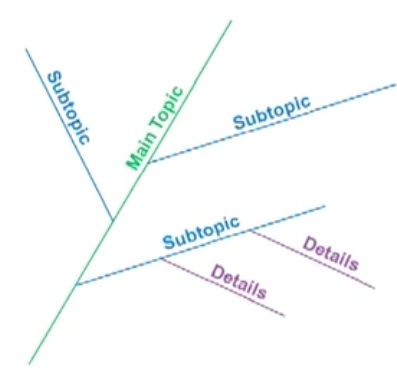
Make a Slash-Recall Diagram as You Read

Level 1: Make a Slash-Recall Diagram as You Read

Level 4 is College-Ready Reading. Your Job is to Read and Understand Every Article:

  • Level 1 Reading: Analytic: Break article down into main arguments & evidence;
  • Level 2 Reading: Synthetic: Put arguments back together in your own words;
  • Level 3 Reading: Critical: Weigh them up, critique them for evidence & consistency;
  • Level 4 Reading: Syn-Topical: come up with your own conclusion/s or opinion/s on School Uniforms based on all the arguments and evidence you’ve encountered …
    All that’s left then is to use that new opinion to inform your actions in life….If you’re starting a school, if you’re a teacher or a student, how will these articles change your behavior?  if you’re wise you might test your conclusions against experience* (link to Empiricism post) before you set it in stone.

Strict Uniform Policy at Academy Strict Uniform Policies Waste of Time

Downloadable PDFs for Seminar (5 Texts):
(run these through Dale Chall 1 side with underlined)

How Strictly Should a School Uniform Policy Be Enforced?

Benefits of Uniforms: Do They Improve Academic Performance?

OTA Uniform Policy Links

Web Links of Original Articles
(Great for the Comments Section–what do the people say?)

How About Adult Dress Codes? To see the Dress Code at a downtown San Diego Night Club…. Continue reading →
Syntopical Unit: Text 1: Hamlet (Tales From Shakespeare-Marcia Williams) • Text 2: Shakespeare in the Bush

Shakespeare in the Bush

Picks from the Past: August–September 1966

An American anthropologist set out to study the Tiv of West Africa and was taught the true meaning of Hamlet.

By Laura Bohannan

Hamlet
Just before I left Oxford for the Tiv in West Africa, conversation turned to the season at Stratford. “You Americans,” said a friend, “often have difficulty with Shakespeare. He was, after all, a very English poet, and one can easily misinterpret the universal by misunderstanding the particular.”

I protested that human nature is pretty much the same the whole world over; at least the general plot and motivation of the greater tragedies would always be clear—everywhere—although some details of custom might have to be explained and difficulties of translation might produce other slight changes. To end an argument we could not conclude, my friend gave me a copy of Hamlet to study in the African bush: it would, he hoped, lift my mind above its primitive surroundings, and possibly I might, by prolonged meditation, achieve the grace of correct interpretation.

It was my second field trip to that African tribe, and I thought myself ready to live in one of its remote sections—an area difficult to cross even on foot. Continue reading →

What is a Gentleman? – Charles Dickens’ Great Expectations

The word ‘gentleman’ continues to sound throughout the novel like a knell: what precisely does Pip mean by it, and how did he envisage this phenomenon?

Today, it’s a concept without form or focus, suggesting little more than a male who stands up for a lady in a quaintly old-fashioned way. We find the idea of bettering oneself by refining one’s manners and culture embarrassing and even snobbish: those we admire, like Jamie Oliver, make a virtue of not concealing their class origins beneath any sort of veneer.

In the mid 19th century, however, being a gentleman meant much more,

* Continue reading →

Great(est) American Novel (Verse Novel, Epic Poem)? John Brown’s Body

Books Are Not Men...Stephen Vincent Benet

Steven Vincent Benet

Books are not men.


Excerpts from the Best American novel. Period.


=========

Excerpts from 

John Brown’s Body  by  Stephen Vincent Benet

Army of the Potomac, advancing army,
Alloy of a dozen disparate, alien states,
City-boy, farm-hand, bounty-man, first volunteer,
Old regular, drafted recruit, paid substitute,
Men who fought through the war from First Bull Run,
And other men, nowise different in look or purpose
Whom the first men greated at first with a ribald cry
“Here they come! Two hundred dollars and a ka-ow!”
Rocks from New England and hickory-chunks from the West,
Bowery boy and clogging Irish adventurer,
Germans who learnt their English under the shells
Or didn’t have time to learn it before they died.
Confused, huge weapon, forged from such different metals,
Misused by unlucky swordsmen till you were blunt
And then reforged with anguish and bloody sweat
To be blunted again by one more unlucky captain
Against the millstone of Lee.

.                                                 Good Stallion,
Ridden and ridden against a hurdle of thorns
By uncertain rider after uncertain rider.
Continue reading →

What is a Gentleman? George Washington’s 110 Rules for Civility

George Washington’s Rules of Civility * Based on the Exercise of a Schoolboy*

George Washington, sometime before the age of 16, transcribed Rules of Civility & Decent Behaviour In Company and Conversation. (excerpt only the bold for Seminar)

(Original errors in numbering have been corrected; original spelling is unchanged.)
  • 1st Every Action done in Company, ought to be with Some Sign of Respect, to those that are Present.
  • 2d When in Company, put not your Hands to any Part of the Body, not usualy Discovered.
  • 3d Shew Nothing to your Freind that may affright him.
  • 4th In the Presence of Others Sing not to yourself with a humming Noise, nor Drum with your Fingers or Feet.
  • 5th If You Cough, Sneeze, Sigh, or Yawn, do it not Loud but Privately; and Speak not in your Yawning, but put Your handkercheif or Hand before your face and turn aside.
  • 6th Sleep not when others Speak, Sit not when others stand, Speak not when you Should hold your Peace, walk not on when others Stop.
  • 7th Put not off your Cloths in the presence of Others, nor go out your Chamber half Drest.
  • 8th At Play and at Fire its Good manners to Give Place to the last Commer, and affect not to Speak Louder than Ordinary.
  • 9th Spit not in the Fire, nor Stoop low before it neither Put your Hands into the Flames to warm them, nor Set your Feet upon the Fire especially if there be meat before it.
  • Continue reading →

What is a Gentleman? by Cardinal Newman

Very Difficult Reading… run Dale-Chall analysis…

In The Idea of a University, originally delivered as a series of lectures in 1852, Newman provides a compelling definition and defense of a liberal arts education, arguing that the primary purpose of a university is to develop the mind, not dispense information.

An excerpt from The Idea of a Univesity is “A Definition of a Gentleman,” a superb example of character writing. Note Cardinal Newman’s reliance on parallel structures in this extended definition, in particular his use of paired constructions and tricolons.

A Definition of a Gentleman  by John Henry Newman

 (bizarre, in many ways!)

[I]t is almost a definition of a gentleman to say he is one who never inflicts pain. This description is both refined and, as far as it goes, accurate. He is mainly occupied in merely removing the obstacles which hinder the free and unembarrassed action of those about him;

Continue reading →