5th Q4 2012-2013 Math Computer Target Scores

Start at the Bottom and Climb!

* * * * * *

* US Standard System of Measurement (also known as: US Customary Units) for measuring capacity (also known as: volume, or 3D space)

US Capacity Volume Measurement Chart

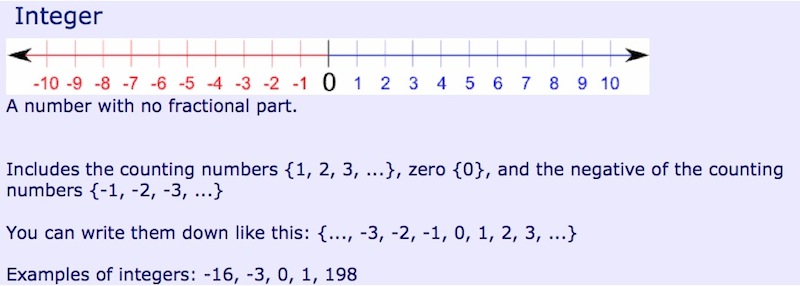
** Integers defined

Definition of Integers-Number line* Continue reading →

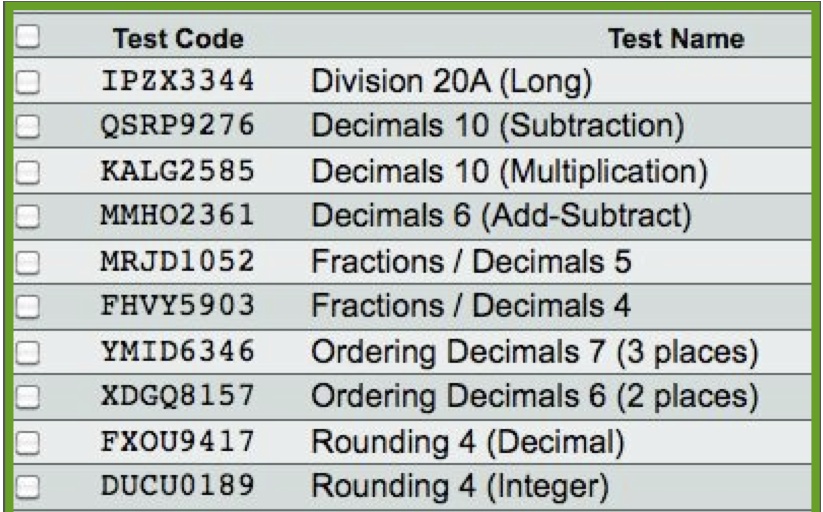
5th Grade 2013-2014 Q1 “That Quiz” Computer TargetScores

That Quiz Games that make you strong

The goal of “That Quiz” math challenges is to help you take basic math skills and make them “Automatic” (= Speed + Perfection) so you can concentrate on solving real math problems from Science, Robotics, Cooking, Carpentry, Business, and more!

Q1 5th Grade ThatQuiz Projects:

(start at the top, for a change, and go down…)

* Continue reading →

Nine Math Acceleration Tools at Old Town Academy

Click To See ALL Nine Math Acceleration Tools used at OTA:

Math scores went up average of 11% school wide in our first two years… all but two grades are now over 90% advanced or proficient in math, vs. only one class in our first year. In 2013-2014 we added ST Math software to the mix to see if its non-verbal approach to deep understanding can boost scores even higher.

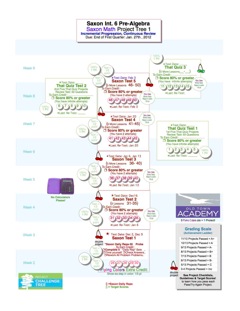
  • 1. Saxon Math Sequence: Incremental progress/continuous review. Why Saxon?
  • 2. Learning Acceleration Math Lab: Thousands of reps with immediate feedback using IXL* (K-3 and 8 algebra) or ThatQuiz* (4th-8th) in the Math Lab + ST Math*.

Click to SEE ALL NINE MATH ACCELERATION TOOLS USED AT OTA

Why Saxon Math — The Word’s Best Math Book?

Genuine learning is demonstrated not only through the understanding of a concept but also through the ability to apply that concept to new situations. Saxon students do both with ease and confidence.Q2-Math-Saxon-project-tree

RESEARCH on the EFFECTIVENESS of the SAXON APPROACH.

The effectiveness of the SAXON APPROACH of INCREMENTAL PROGRESSION + CONTINOUS REVIEW was first demonstrated during the 1980-1981 school year in twenty Oklahoma public schools. Over 1,360 ninth grade Algebra I students participated. In each school one teacher taught one section from a SAXON MATH BOOK and one or more sections from the REGULAR MATH BOOK (new topics every chapter and a daily problem set that drops earlier topics to focus on the new lesson). During the spring, sixteen 10-15 minute tests were given. Each test was on one fundamental skill of beginning algebra and the tests were constructed from problems submitted by the teachers. Overall, the students who used the SAXON MATH BOOK more than doubled the scores of the students who had the same teacher but used a REGULAR MATH BOOK.

For tests on scientific notation and negative exponents, eight classes of Algebra II students were used as controls. The ninth graders who had used the SAXON MATH BOOK more than tripled the scores of the Algebra II students on both of these tests. The test program was monitored by the Oklahoma Federation of Teachers, and they have certified the results.

Students should work every problem in every problem set. This book provides only the problems that are necessary and the problems are not in pairs so that either the odd or the even problems may be assigned. Experience with this book will demonstrate that no extra problems of the new topic are desirable or necessary.* In this book the learning process is spread out and comprehension will come in time. The emphasis is on review and not on an all out attack on the new concept. This development spreads out the learning process, increases the depth of understanding and improves long term retention. Experience with books that use the traditional development of topics has proved that an intensive initial attack on a new concept lends little to long term retention. Remember that SAXON MATH BOOKS never drop a topic once it has been introduced and that the student will continue to wrestle with every concept in every homework problem set.


*  But extra problems of the word problem kind—problems with more life in them than Saxon’s— are necessary and are provided in the Problems Tremendums et Fascinans Course

Why Saxon Math? “Ignition” (Motivation) Talent-Code-Style

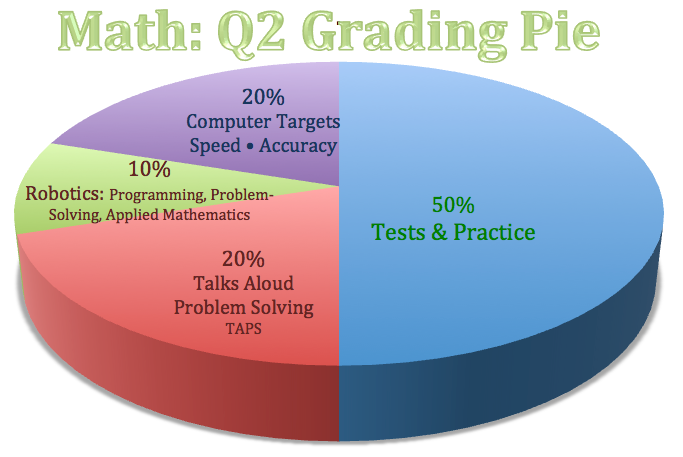
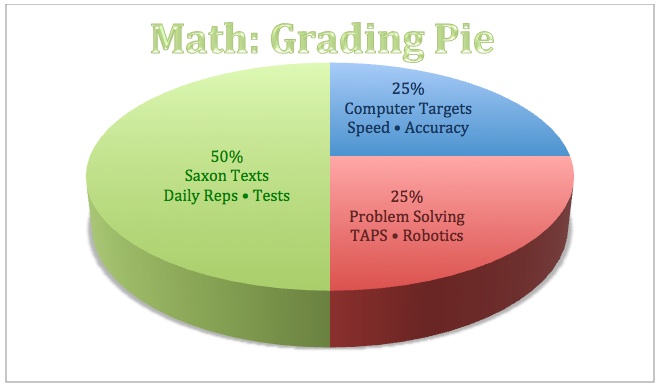
Math Q2 Grading Pie-Robotics

1. Why Do We Use Saxon Math Texts? (How to Study Math–follow this method and, even if you’ve never liked math, you will succeed):
  • Reading & Writing Math: Incremental Progression; Continuous Review
  • Every subject is easy if you take it step-by-step.
  • Saxon doesn’t let you forget the skills you’ve worked so hard to learn. Every Daily Rep problem set is a final exam!
Why Saxon’s the World’s Best Math Book

Continue reading →

How to Use Saxon Math Textbooks

SAXON MATH • OUR MISSION:

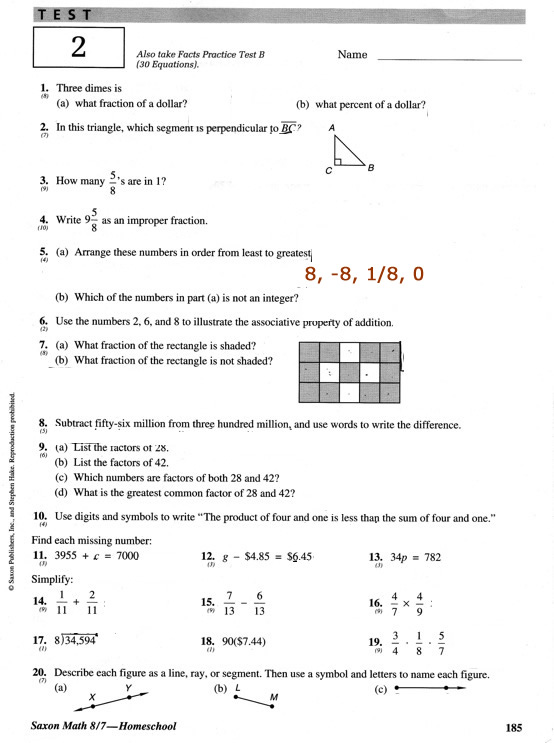
We are dedicated to turning around education by publishing textbooks and instructional Saxon 87 Test 2 (1-10)materials that have proven records of success in the classroom.
Our Philosophy

Learning need not be difficult, but neither does it happen quickly. Time is the elixir that turns things new into things familiar. Therefore, the most effective way for students to learn is through gentle development of concepts and the practice of those concepts extended over a considerable period of time.  At Saxon, we call these methods incremental development and continual review and we have applied to mathematics and the fundamental skills of reading.

Dear Teacher, Stop Talking & Coach!
(See the “Time Thief” Job… for students)

The Teachers job is to make a short presentation of the new lesson and then let the students get to work on their Daily 30 Problem Sets. While they work the teacher goes around the classroom and coaches them on the 2-4 new problems or the 26-28 review problems as needed. The goal is to maximize student Hands-On Practice Time and teachers’ Coaching Time. With good concentration students should be able to finish 50%-100% of their Daily Reps in school.

Many ideas in math that seem complex and overwhelming turn out to be “hard by the yard, but a cinch by the inch.” If we break complex ideas into small easily understandable pieces (increments), we permit the assimilation of one facet of a concept before the next facet is introduced. Both facets are then practiced together until another is introduced.

The incrementalization of topics is combined with continual review, wherein all previously learned material is reviewed in every lesson for the entire year. Topics are never dropped but are instead increased in complexity and practiced every day, providing the time required for concepts to become totally familiar.

As concepts become familiar and the requisite skills become automated, learning becomes a game at which students can succeed and through which they find satisfaction and self-worth. More importantly, the automation of fundamental skills frees students’ minds to think about and solve real math problems (aka Word Problems).

Genuine learnng is demonstrated not only through the understanding of a concept but also through the ability to apply that concept to new situations. Saxon students do both with ease and confidence.

 …….

Students should work every problem in every problem set. Continue reading →
How Tests Make Us Smarter – Low Stakes Quizzes

JULY 18, 2014  By HENRY L. ROEDIGER III

TESTS have a bad reputation in education circles these days: They take time, the critics say, put students under pressure and, in the case of standardized testing, crowd out other educational priorities. But the truth is that, used properly, testing as part of an educational routine provides an important tool not just to measure learning, but to promote it.

In one study I published with Jeffrey D. Karpicke, a psychologist at Purdue, we assessed how well students remembered material they had read. After an initial reading, students were tested on some passages by being given a blank sheet of paper and asked to recall as much as possible. They recalled about 70 percent of the ideas.

Other passages were not tested but were reread, and thus 100 percent of the ideas were re-exposed. In final tests given either two days or a week later, the passages that had been tested just after reading were remembered much better than those that had been reread.

What’s at work here? When students are tested, they are required to retrieve knowledge from memory…

via How Tests Make Us Smarter – NYTimes.com.