Statistics and the Scientific Method • Bayesian vs Frequentist Analysis of Results

INDEPENDENT LEARNING PROJECT:

  1. Read Darwin “Seeds & Salt Water” Experiment
  2. Read the full article (link below) and research Bayesian vs Frequentist Statistics
    1. Explain why: “Scientists who have learned Bayesian statistics often marvel that it propels them through a different kind of scientific reasoning”
    2. Explain what the author means when he says, “Bayesian calculations go straight for the probability of the hypothesis, factoring in not just the data from the coin-toss experiment but any other relevant information”
    3. Explain what counter-intuitive advice Bayesian statistics would recommend to a “Let’s Make a Deal” game show contestant.
  3. Analyze Results using BOTH Methods

When people think of statistics, they may imagine lists of numbers — batting averages or life-insurance tables.

  • But the current debate is about how scientists turn data into knowledge, evidence and predictions.
  • Concern has been growing in recent years that some fields are not doing a very good job at this sort of inference.

In 2012, for example, a team at the biotech company Amgen announced that they’d analyzed 53 cancer studies and found it could not replicate 47 of them.

Similar follow-up analyses have cast doubt on so many findings in fields such as neuroscience and social science that researchers talk about a “replication crisis”

Some statisticians and scientists are

  • optimistic that Bayesian methods can improve the reliability of research by
  • allowing scientists to crosscheck work done with the more traditional or “classical” approach, known as frequentist statistics.

The two methods approach the same problems from different angles.

The essence of the frequentist technique is to apply probability to data. If you suspect your friend has a weighted coin, for example, and you observe that it came up heads nine times out of 10, a frequentist would calculate the probability of getting such a result with an unweighted coin. The answer (about 1 percent) is not a direct measure of the probability that the coin is weighted; it’s a measure of how improbable the nine-in-10 result is — a piece of information that can be useful in investigating your suspicion.

  • By contrast, Bayesian calculations go straight for the probability of the hypothesis, factoring in not just the data from the coin-toss experiment but any other relevant information — including whether you’ve previously seen your friend use a weighted coin.
  • Scientists who have learned Bayesian statistics often marvel that it propels them through a different kind of scientific reasoning than they’d experienced using classical methods.

“Statistics sounds like this dry, technical subject, but it draws on deep philosophical debates about the nature of reality,” said the Princeton University astrophysicist Edwin Turner, who has witnessed a widespread conversion to Bayesian thinking in his field over the last 15 years.

via The Odds, Continually Updated – NYTimes.com.

Declining Biodiversity • Historical photographs expose decline in coastal fisheries, new Scripps study finds

Published: Tuesday, February 17, 2009 – 15:15 in Earth & Climate

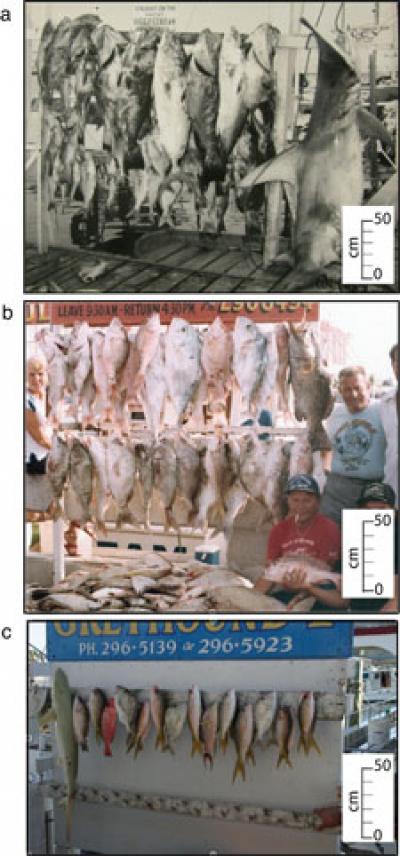
Decline in Fish Size over 3 generations

Loren McClenachan, Scripps Institution of Oceanography, UC San Diego

A unique study by a scientist at Scripps Institution of Oceanography at UC San Diego has provided fresh evidence of fishing’s impact on marine ecosystems. Scripps Oceanography graduate student researcher Loren McClenachan accessed archival photographs spanning more than five decades to analyze and calculate a drastic decline of so-called “trophy fish” caught around coral reefs surrounding Key West, Florida. In a paper published online in January and printed in an upcoming issue of the journal Conservation Biology, McClenachan describes a stark 88 percent decline in the estimated weight of large predatory fish imaged in black-and-white 1950s sport fishing photos compared to the relatively diminutive catches photographed in modern pictures. In a companion paper being published in the Endangered Species Research journal, McClenachan employs similar methods to document the decline of the globally endangered goliath grouper fish.

“These results provide evidence of major changes over the last half century and a window into an earlier, less disturbed fish community…” McClenachan said in the Conservation Biology paper.

McClenachan’s studies are part of an emerging field called historical marine ecology, in which scientists study photographs, archives, news accounts and other records to help understand changes in the ocean ecosystem over time and establish baselines for future ecosystem restoration.

via Historical photographs expose decline in Florida’s reef fish, new Scripps study finds | e! Science News.

Some Universities Crack Code in Drawing Women to Computer Science – NYTimes.com

Claire Cain Miller

One of the reasons so few women work in tech is that few choose to study computer science or engineering. Only 18 percent of computer science graduates in the United States are women, down from 37 percent in 1985.

At a few top college programs, though, that appears to be changing.

At Carnegie Mellon University, 40 percent of incoming freshmen to the School of Computer Science are women, the largest group ever. At the University of Washington, another technology powerhouse, women earned 30 percent of computer science degrees this year. At Harvey Mudd College, 40 percent of computer science majors are women, and this year, women represented more than half of the engineering graduates for the first time.

These examples provide a road map for how colleges can help produce a more diverse group of computer science graduates. They also help answer a controversial question: Does the substance of computer science instruction need to be adjusted to attract women, or does recruitment and mentorship? It’s an important question because tech companies have so many jobs to fill, and because computer science skills have become necessary in almost every other industry, too.

via Some Universities Crack Code in Drawing Women to Computer Science – NYTimes.com.

OTA’s Finest Outdoor Ed. Program: Yosemite National Park

Twenty years from now you will be more disappointed by the things that you didn’t do than by the ones you did do. So throw off the bowlines. Sail away from the safe harbor. Catch the trade winds in your sails. Explore. Dream. Discover.
– Mark Twain

2014-05-11 17.41.40

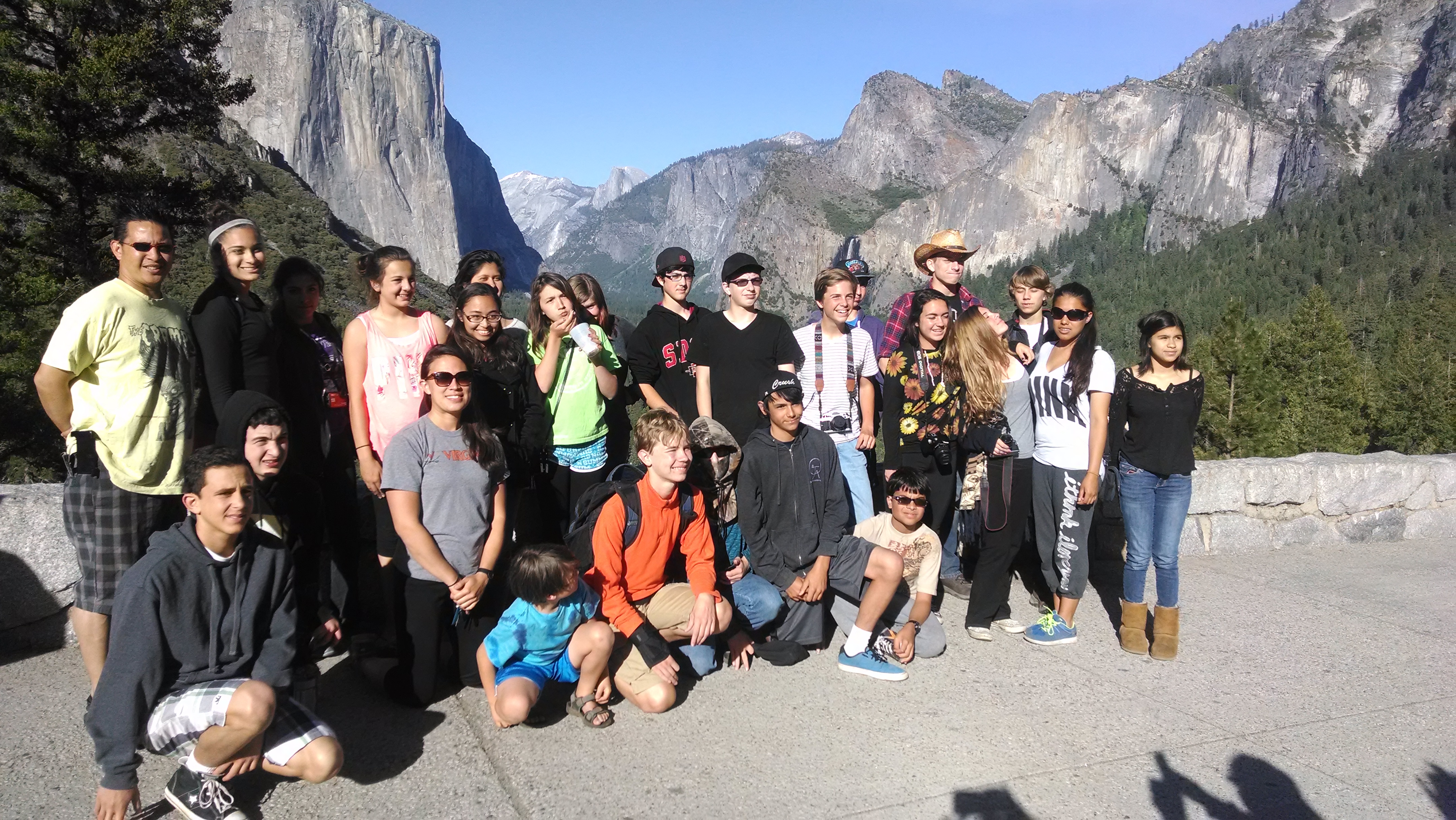
It is with great pleasure that our 8th graders are able to experience first hand one of our nation’s greatest treasures, Yosemite National Park. All throughout our carefully crated experiences, we hoped that each student would gain insight on a few things:

  • Create culinary delights with limited resources
  • Persevere through a variety of perceived physical and mental boundaries.
  • Find inspiration in the natural world through temporary art a’la Andrew Goldsworthy.
  • Gain more understanding for how and why we need to preserve our natural spaces.

Click on the link below to catch a glimpse of their incredible adventures!

http://youtu.be/OqQTaIiI5y8

If the Robots Kill Us, It’s Because It’s Their Job – Patrick Tucker – The Atlantic

The math that explains why that is Omohundro calls the formula for optimal rational decision making. It speaks to the way that any rational being will make decisions in order to maximize rewards and lowest possible cost. It looks like this:

In the above model, A is an action and S is a stimulus that results from that action. In the case of utility function, action and stimulus form a sort of feedback loop. Actions that produce stimuli consistent with fulfilling the program’s primary goal will result in more of that sort of behavior. That will include gaining more resources to do it.

For a sufficiently complex or empowered system, that decision-making would include not allowing itself to be turned off, take, for example, a robot with the primary goal of playing chess.

“When roboticists are asked by nervous onlookers about safety, a common answer is ‘We can always unplug it!’

But imagine this outcome from the chess robot’s point of view,” writes Omohundro. “A future in which it is unplugged is a future in which it cannot play or win any games of chess. This has very low utility and so expected utility maximisation will cause the creation of the instrumental subgoal of preventing itself from being unplugged. If the system believes the roboticist will persist in trying to unplug it, it will be motivated to develop the subgoal of permanently stopping the roboticist,” he writes.

In other words, the more logical the robot, the more likely it is to fight you to the death.

via If the Robots Kill Us, It’s Because It’s Their Job – Patrick Tucker – The Atlantic.

Drought-Resistant Plants That Give Bees a Leg Up – NYTimes.com

In the Central Valley, the research to support that work is done on 106 acres of prime farmland at a Department of Agriculture plant materials center. The results are beautiful: More than 2,200 feet of hedges and fields of blended crops present a feast for the eyes — and for bees — beginning in early spring. On a recent viewing, flowers dotted the landscape with color. The bright orange flowers of California poppies opened near rich purple lupines. Last year, an entomologist found about 50 species of bees and 1,500 other beneficial insects, birds and creatures of all sorts in the hedgerows.Jessa Cruz, a senior pollinator conservation specialist with the Xerces Society, a nonprofit organization dedicated to improving pollinator health that is collaborating with the center, said drought-resistant plants that are bee friendly are increasingly important in arid California.“It’s important to be able to tell farmers, ‘You’re not going to have to use your precious water to irrigate your hedgerows,’ ” Ms. Cruz said.The use of hedgerows and cover crops is on display at nearby Vino Farms, whose grapes are bought by 180 wineries. Growing among the vines are peas and beans, aromatic sage, golden currant, wild rose and even daikon radish.

via Program Looks to Give Bees a Leg or Six Up – NYTimes.com.

Mission Trails Outdoor Ed. Experience

“Remember what Bilbo used to say: ‘It’s a dangerous business, Frodo, going out your door. You step onto the road, and if you don’t keep your feet, there’s no knowing where you might be swept off to.”” — J.R.R. Tolkien

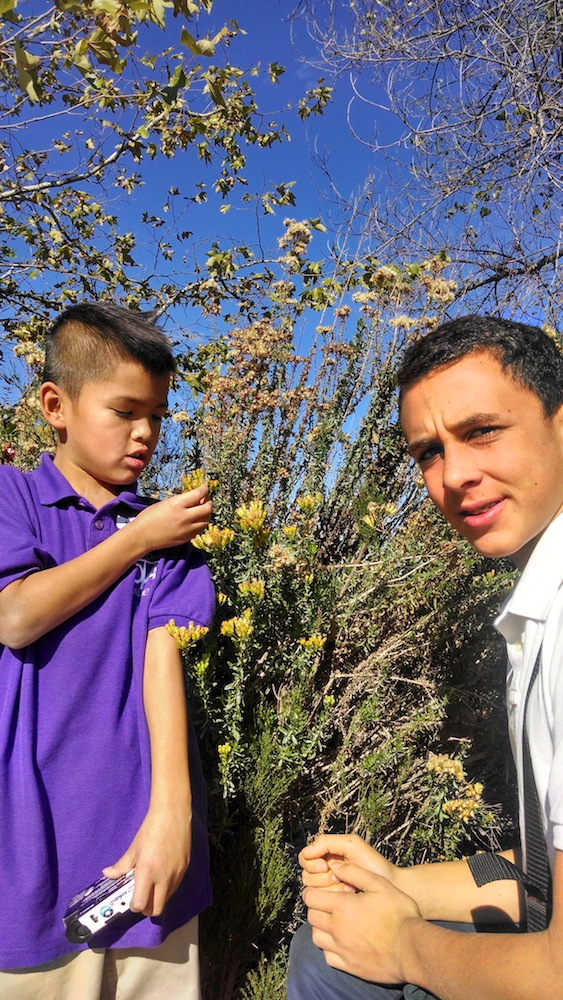
And so it was, that the 4th & 8th grade classes embarked on a small adventure to explore the Mission Trail Regional Park. Partnered with buddies from Ms. Foster’s class, the 8th graders were focused on the following Essential Questions of the Day: Where does our water come from? What are some of the species that inhabit our local San Diego River Watershed?

Tracing our watershed upstream from Mission Valley, the San Diego River winds its way up past Qualcomm Stadium, along the edge of La Mesa until it arrives at Mission Trails. With the guidance of 4 different rangers, our buddy groups were able to separate for a better chance to investigate and observe the flora and fauna. Among the following species that we were able to capture on film, we saw a few species of hawks, a tarantula hawk which is not a hawk at all but rather a very large flying insect, as well as evidence for some much larger mammal species such as mule deer, raccoon, cottontail rabbit, kangaroo deer, & coyote.

American 15-Year-Olds Lag, Mainly in Math, on International Standardized Tests – NYTimes.com

In the United States, just 9 percent of 15-year-olds scored in the top two levels of proficiency in math, compared with an average of 13 percent among industrialized nations and as high as 55 percent in Shanghai, 40 percent in Singapore, and 17 percent in Germany and Poland.

Jack Buckley, the commissioner of the National Center for Education Statistics, noted that American students from families with incomes in the highest quartile did not perform as well as students with similar backgrounds in other countries.

via American 15-Year-Olds Lag, Mainly in Math, on International Standardized Tests – NYTimes.com.

Independent Reading… Science Extra Credit Reading Challenges – Joy Hakim

October 7, 2010 by questmiddleschool

Science Test #2 next Thursday! Oct 28.

Topics: Electromagnetic Energy: Permanent and Electromagnets

Optional Science Reading Projects: The Story of Science: Newton at the Center, by Joy Hakim:
READING Project 1:  Chapter 31 (A Shocking Science: Energy, Franklin, Static Electricity)

  • Prep for “Reading Pie” Oral Exam (Slice 1: p. 324; Slice 2: pp 322-333; Slice 3: p. 331.) Pass all three 3 slices for credit.Questions are always the same*
  • Create Mind Map of chapter vocab and scientists for extra credit.

READING Project 2: Chapter 32 (Michael Faraday Has a Field Day: Electromagnetic Fields and Motors). Continue reading →