How plants adapt: Calcium waves help the roots tell the shoots

calcium waves help plants react to environment*

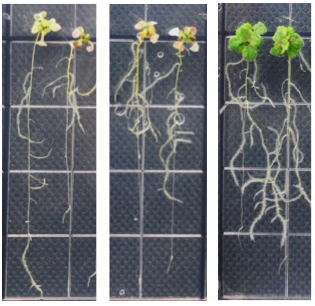
Arabidopsis thaliana growing in salt water. The plant on the right has more of the protein channel TPC1, thought to be involved in calcium signaling in plants. The plant at center has less TPC1 than normal, and the one on the left is considered normal. Credit: Won-Gyu Choi/Gilroy Lab
It’s a finding that has implications for those interested in how plants adapt to and thrive in changing environments. For instance, it may help agricultural scientists understand how to make more salt- or drought-tolerant plants.

“How do you think plants live?” Gilroy asks. “If I poke you, I see an instant response. You move away. Plants live in a slightly different world. They are rooted to the ground, literally, and they respond to the world either by growing or creating chemicals.”

Calcium is involved in transmitting information in the cells of humans and other animals, contracting muscles, sending nerve signals and more.

In plants, scientists believed it had to also play a role in processing information and sending rapid signals so that plants can respond quickly to their environments.

Imagine you are a plant being eaten by a caterpillar: “It’s like a lion chewing your leg,” says Gilroy. “If an insect is chewing your leaf, you’re gone unless you determine something effective immediately.”

But no one had ever been able to see it before. Even Gilroy’s team found it by accident.

via How plants adapt: Calcium waves help the roots tell the shoots.
La Jolla Marine Preserve • Tide Pools (“Dike Rock”-Scripps Pier) • PROJECT 4: Geology of La Jolla Marine Preserve

Geology of Dike Rock Tide Pools (North of Scripps Pier)

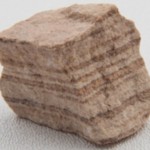
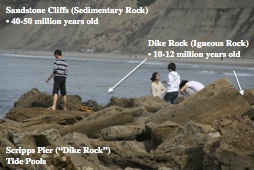
“This tidepool area is interesting for several reasons. First, the geology is unique. Most of the rocks in the coastal areas of Southern California represent ancient beach deposits and are largely sandstones and siltstones. The layering is obvious in the cliffs on either side of the tide pool. These rocks are about 40 to 50 million years old.

Geology Cliffs-Dike of La Jolla, Dike Rock Tide Pools

“But if you look carefully at the main rock bench that extends out into the ocean and forms the foundation for the tide pools, you’ll see that it is not the same rock that makes up the cliffs . It is darker and harder, and looks similar to the lava rock common on volcanic islands. This vertical outcrop, or “Dike,” was formed from hot, molten rockthat forced its way up through a crack in the layered beach rocks of the cliffs about 10 to 12 millions years ago (Miocene Epoch). This geologic feature is called a dike, hence the name “Dike Rock,” one of the most prominent features of these tide pools.”

What are the Three Types of Rock and How is Each Created (Rock Cycle)?

Igneous (from Latin igneus: “fire”): rocks formed from lava or magma (underground molten rock) Continue reading →

Dissolving Sugar in Water: Chemical or Physical Change?

Question: Is Dissolving Sugar in Water a Chemical or Physical Change?

Is dissolving sugar in water an example of a chemical or physical change? This process is a little trickier to understand than most, but if you look at the definition of chemical and physical changes, you’ll see how it works. Here’s the answer and an explanation of the process.

Answer: Dissolving sugar in water is an example of a physical change. Here’s why: A chemical change produces new chemical products. In order for sugar in water to be a chemical change, something new would need to result. A chemical reaction would have to occur. However, mixing sugar and water simply produces… sugar in water! The substances may change form, but not identity. That’s a physical change.

via Dissolving Sugar in Water: Chemical or Physical Change?.

Dissolving Salt in Water – Chemical or Physical Change?

When you dissolve table salt (sodium chloride or NaCl) in water, are you producing a chemical change or a physical change? A physical change results in a change of the material’s appearance, but no new chemical products result. A chemical change involves a chemical reaction, with new substances produced as a result of the change. When you dissolve salt in water the sodium chloride dissociates in Na+ ions and Cl- ions, which may be written as a chemical equation:

NaCl(s) → Na+(aq) + Cl-(aq)

Therefore, dissolving salt in water is an example of a chemical change.

If you search online for the answer to this question, you’ll see about equal numbers of responses arguing that dissolving salt is a physical change as opposed to a chemical change. The confusion arises because one common test to help distinguish chemical and physical changes is whether or not the starting material in the change may be recovered using only physical processes. If you boil the water off of a salt solution, you’ll obtain salt.

So, you’ve read the rationale. What do you think? Would you agree dissolving salt in water is a chemical change?

via Dissolving Salt in Water – Chemical or Physical Change?.

Using Atomic Theory to Understand • Why Salt (NaCl) Dissolves in Water (H2O)

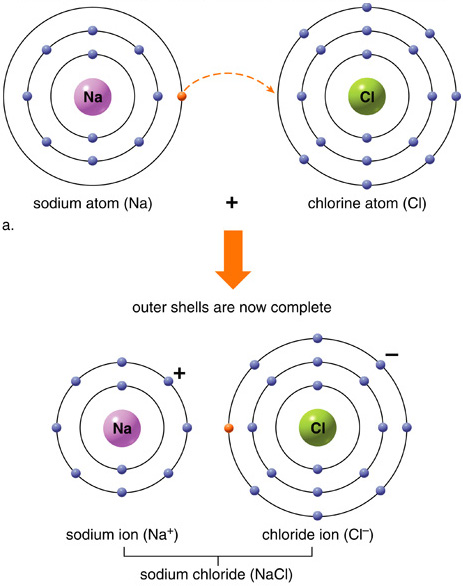
Salt is formed when Sodium and Chlorine atoms share electrons…NaClNaCl ionic Bonds

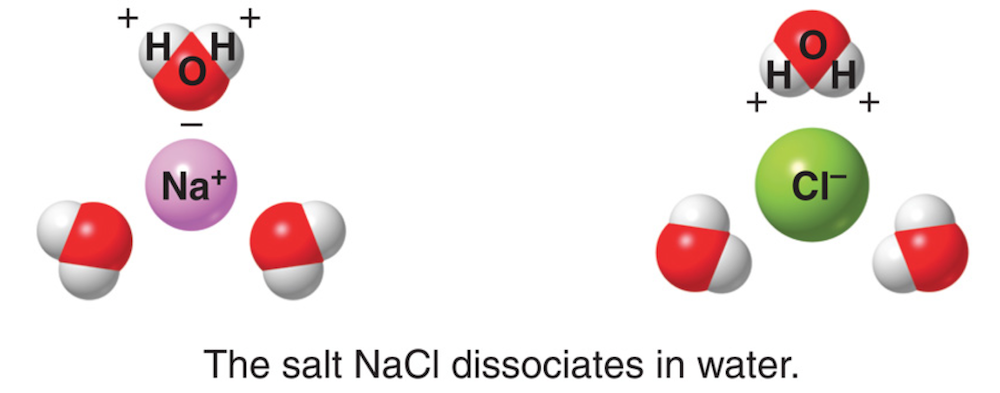
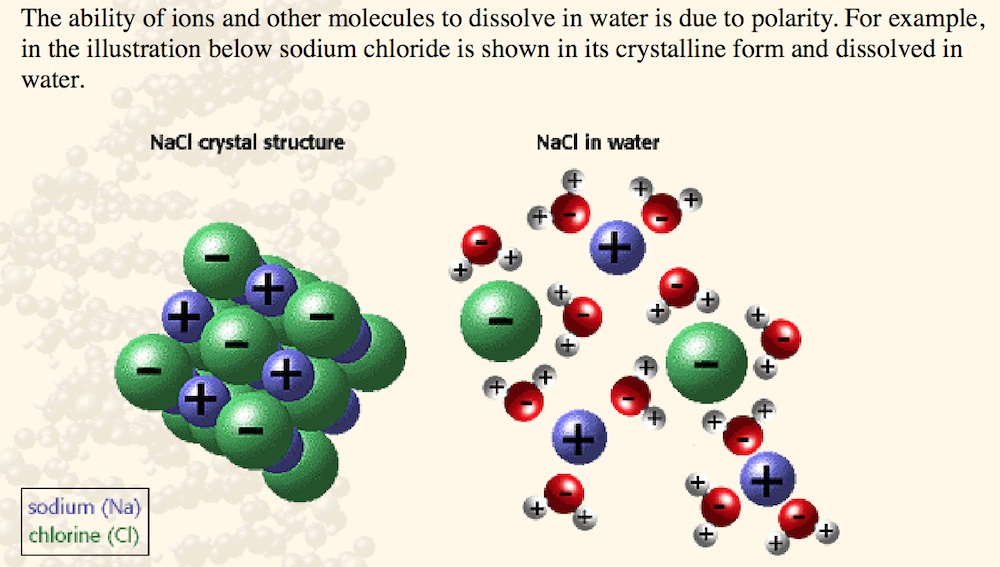
But salt, NaCl, atoms break apart in Water (a chemical change)… into positive Na ions and negative Cl ions. Why?

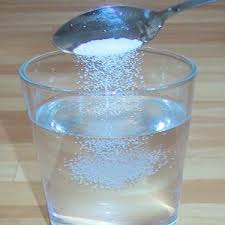
Teaspoon of Salt in Water

Water is a solvent that can dissolve (break apart) many substances.

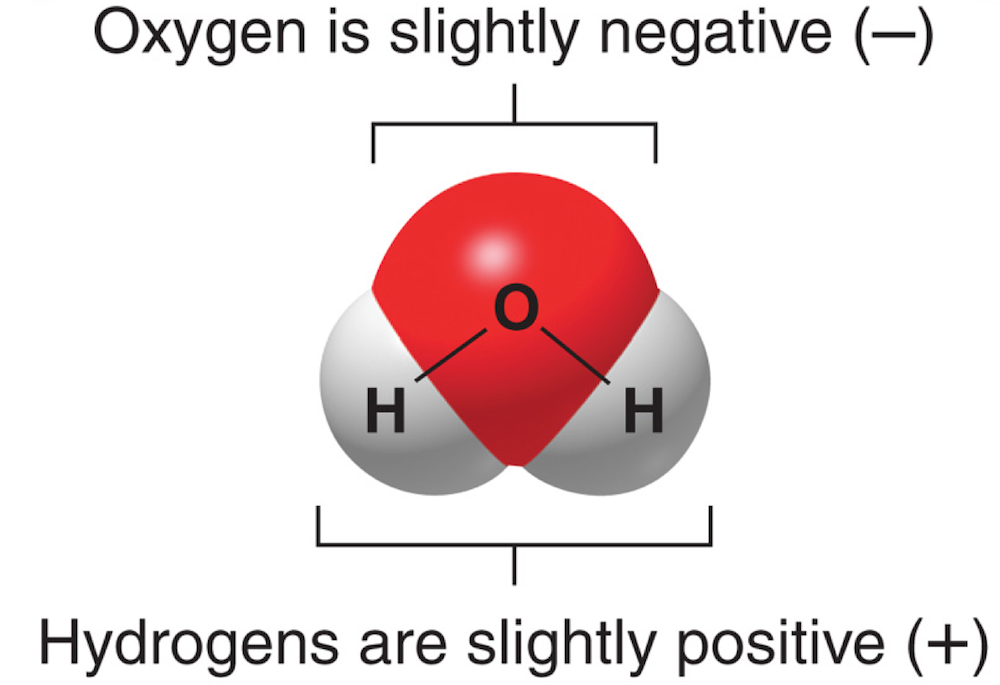
Water molecules are like mini-magnets. One side is more negative, one side more positive)
These mini magnets interact with the charged atoms of many molecules, including NaCL, breaking them apart.

Water H2O molecules are polar
Water molecules are Polar (having + & – poles)

The polar water molecules remain intact and their electro-magnetic energy

  • attracts the positive Na ions to their negative (Oxygen) side, and
  • attracts the negative Cl ions to their positive (Hydrogen side)

Salt NaCl dissociates in water H2O*

NaCL in Water-Diagram“Magical” properties of Water: Why does is it called the “universal solvent”? (why can it dissolve so many compounds?) Why doesn’t water ice, a solid, sink to bottom of pond?


What is Zingy Science? 5 Demos: Gravity, Metric System, Electrons, Alcohol Solution, Density

Dear 8th Grade Parents, Click on the links below to try sample Zingy Science Modules:

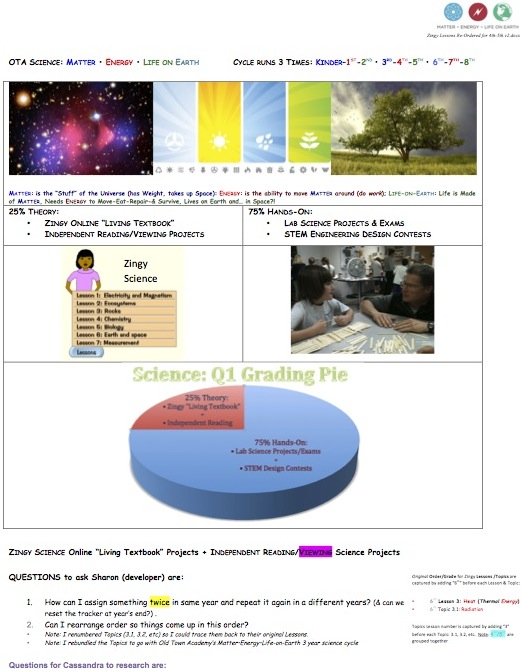
DRAFT Zingy Lessons Re-Ordered for OTA 4th-5th v2

25% Theory | 75% Lab Science Project & Exams???? or 40% | 60% in 2014-2015

DRAFT Zingy Lessons Re-Ordered for OTA 4th-5th v2

— Continue reading →

How do you design the circuit diagram for a fire alarm system?

Radon 360 makes excellent points, but not all systems operate in that fashion and you will find different regulations in different countries (and unfortunately in different provinces or states.)

Most systems in the European community operate with closed loops circuits and an open circuit is an alarm. In the U.S. it’s backwards, most systems close the circuit on alarm or lower the resistance on an initiaing circuit to the “alarm threshold”.

There are pros and cons to both ways.

If the circuit remaining closed is a “safe” condition, this if something is inadvertently shorted or if a fire melts the insulation and the conductors touch, placing a short on the circuit, the system will fail to function properly. Conversely, on a system that needs a circuit closure to activate, then a cut wire, or one conductor melted away would prevent proper operation. Continue reading →

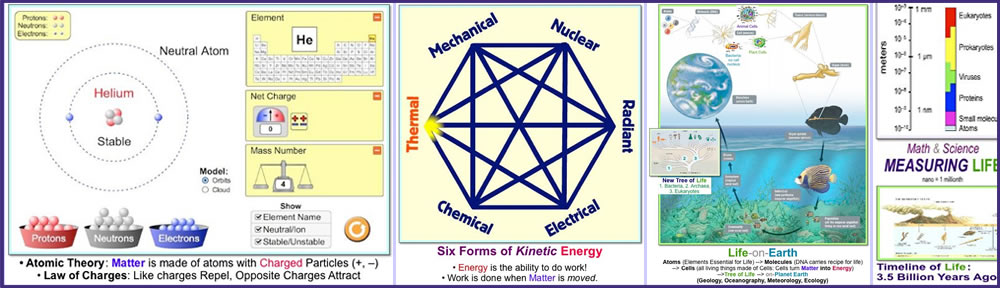
Matter • Energy • Life-on-Earth… Measurement & Math… Technology… Experimental Design

Matter Energy Life-on-Earth Header8

The “Star Trek Game”: While “boldly seeking out new worlds” as captain of the Enterprise… the Admiral allows you an exception to the Prime Directive (non-interference with alien civilization rule)…

a planet is dying and if the natives don’t have a scientific revolution soon they will perish: You may tell the young civilization one scientific secret before you move on. What would you tell them?

Others classes picked:

Continue reading →

Link to Museum of Science and Industry: The Science of Particles

The Science of Particles

Everything we experience in our everyday lives is the result of just a few fundamental particles. Physicists have uncovered much about the structure of matter, but there still remain some huge unsolved mysteries, such as dark matter, antimatter and – up until the discovery of the Higgs boson – how some particles gain mass. Quantum Mechanics.

The Standard Model of particle physics 

The Standard Model of particle physics is the closest physicists have to a theory of everything. It describes all the known particles, and hence everything that makes up the visible universe. Max and Tangle explain in this short animation by the BAFTA award-winning Brothers McLeod.

via What’s On | Collider | The Science of Particles | MOSI.