Public Circuit Boards (Gongban) China’s Collaborative Electronics-Design Ecosystem – The Atlantic

A different story emerges in the burgeoning wearable electronics market of Southern China, one that is based on a rapid, flexible and open ecosystem called shanzhai 山寨.

Take, World Peace Industrial (WPI), a Taiwanese electronic sourcing company located in Shenzhen, as an example. The company’s application technology unit (ATU) spends millions annually to develop reference circuit boards, called gongban 公板 (“public board”). A gongban can be used by a variety of different companies, who either incorporate it in their products directly or build atop it as they please via modifications. ATU develops 130 gongbans annually in areas ranging from smart phones, tablets, smart watches, smart homes, and industrial controls—and distributes the designs for free. WPI then makes money by trading in the boards’ components.

"We call this shanzhai in Shenzhen. It’s a mass production artwork,” explains Lawrence Lin head of the Application Technology Unit at WPI. Thirty some companies in Shenzhen are shipping their own smart watches with gongban from ATU and gongmo (‘public case’) sourced from the massive shanzhai ecosystem, which consists of tens of thousands of companies that manufacture and distribute goods.

Shanzhai used to refer to knock-off retail, and later end-consumer electronics, such as mobile phones of major brands like Nokia, Motorola and Ericson, often specifically designed for non-Western markets in China, South East Asia, South America, the Middle East and Africa. The ecosystem grew rapidly and by 2010, it was producing 200 million phones annually and was responsible for a quarter of the global mobile phone market. Since then, the shanzhai ecology has moved beyond cloning and enabled a wealth of iterative innovations including dual-SIM for frequent travelers to avoid roaming charges, seven-speaker phones for workers to listen to music at construction sites, and custom-designed phones for migrant populations unable to afford the latest smartphone.

via Shanzhai: China’s Collaborative Electronics-Design Ecosystem – The Atlantic.
High speed M&M sorting machine from iPhone, Arduino,

M&M sorting machines are a popular project for people who like combining electronics, programming and machine building. I decided I’d try to make my own version but with a different approach to the majority of existing M&M (or Skittles / Smarties!) sorting machines out there.

Most of them send a single M&M down a chute to a simple colour sensor where the colour sensor will then take a second or two to figure out the colour. A servo motor will then rotate a chute that will direct the M&M into the correct pot.

My approach sends M&Ms down a chute to start with. But I don’t stop the M&M for colour recognition. Instead I use an iPhone to capture the colour of the M&M as it is in freefall. As it is still falling the iPhone talks to a Bluetooth module attached to an Arduino and that fires off the correct electro magnet controlled gate. This sends the M&M into the correct pot. Even though this is just a rough prototype it is reasonably fast because the colour recognition and path that the M&M takes down the chute is decided and determined whilst the M&M is moving under gravity. Here’s a video of the prototype:

via High speed M&M sorting machine.

Newton’s Laws of Motion • 5,200 Days in Space – The Atlantic

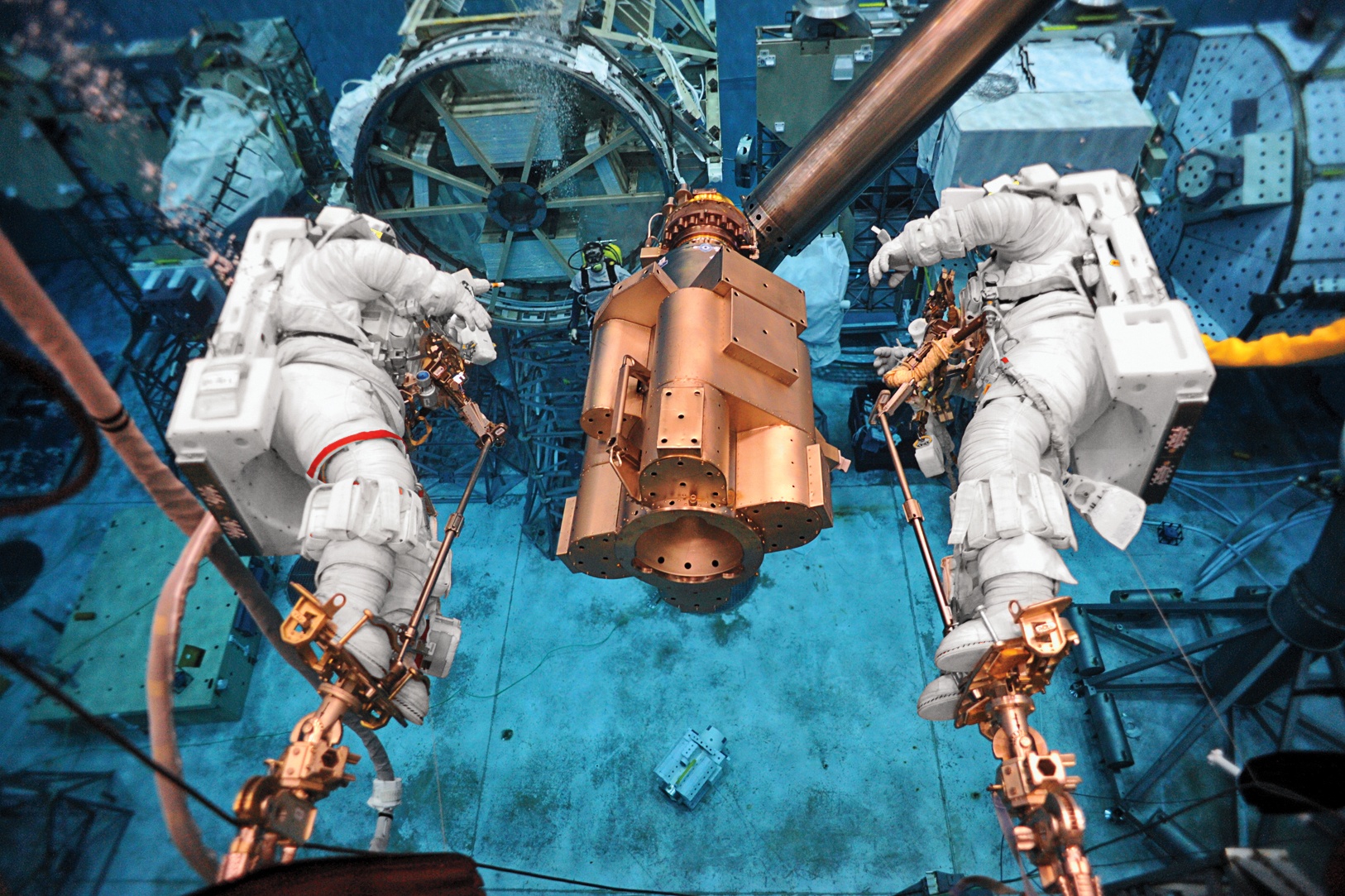
“What’s it like to live in zero‑G?” asks Sandra Magnus, who took three spaceflights, including 130 days on the station, before her recent retirement from the astronaut corps. “It’s a lot of fun,” she says, then bursts out laughing. “I learned to carry things with my knees—tuck them between my knees and shove off. That way I had my hands free to propel myself. The thing is, in space, Newton’s laws rule your life. If you’re doing something as simple as typing on a laptop, you’re exerting force on the keyboard, and you end up getting pushed away and floating off. You have to hold yourself down with your feet.” Magnus developed calluses on her big toes because she used them continuously, in stocking feet, to navigate and position herself.

Gravity is an indispensable organizing tool, she says, one you don’t appreciate until you have to live without it. “Just look around the room you’re in … There’s stuff sitting on tables, on shelves, in drawers, on the floor. In space, all of that would be all over the place.” Every single item you use needs to be secured, or it will float off. Astronauts mutter quietly about the amount of time they spend searching for misplaced equipment—“Keeping track of stuff can eat your whole day,” says the astronaut Mike Fincke—but securing everything also takes time.

via 5,200 Days in Space – The Atlantic.

Octopus vs. Sea Lion—First Ever Video

  • Sea Lions always feed on the seafloor, never on pelagic prey

New National Geographic Crittercam footage shows never before seen eating habits of the Australian sea lion—including video of a sea lion hunting a large octopus. The footage is from a project intended to help save the endangered sea lions, in part by uncovering where and how the animals eat.

via Octopus vs. Sea Lion—First Ever Video.

Does Vinyl Really Sound Better? An Engineer Explains

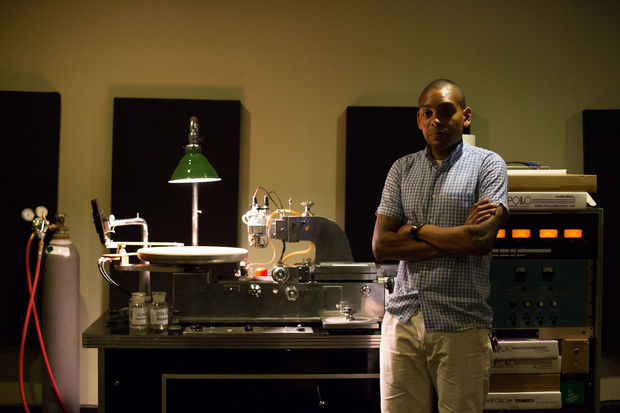
Adam Gonsalves cuts vinyl records on his lathe

Mastering engineer Adam Gonsalves cuts lacquers for vinyl records in his Southeast Portland studio with a 1960s Scully lathe and other audio gear. David Greenwald/The Oregonian

Fighting the loudness wars: Digital music engineering, particularly for radio-bound music, is often marred by a volume arms race, which leads to fatiguing, hyper-compressed songs that squish out the dynamics and textures that give recordings their depth and vitality. Vinyl’s volume is dependent on the length of its sides and depth of its grooves, which means an album mastered specifically for the format may have more room to breathe than its strained digital counterpart. The longer an album, the quieter it gets: Gonsalves played me Interpol’s lengthy debut album and a 12-inch Billy Idol single, and the decibel difference — without any distortion creeping in — was remarkable.

That warm vinyl sound: “I think this is what people like about it: it pins very closely to the way that human beings hear music organically,” Gonsalves said. “It’s very mid-range-y and very warm,” a sound that flatters the fuzzy guitars of rock ‘n’ roll.

The bad

“All-analog” doesn’t always happen: Many modern vinyl records are produced from digital masters, either recordings made natively in software such as Pro Tools or converted from tape before being sent along for mass production. When I visited Gonsalves, he was working on My Brightest Diamond’s new album — from his computer. But analog-to-digital conversion (and vice versa) has come along quite a bit since the birth of the CD, and Gonsalves says he asks for high-definition, 24-bit files to master from if digital’s the option.

Still, as artists and labels hop on the vinyl trend, some new vinyl releases may be mastered from CD-quality audio, not the high-resolution formats audiophiles and folks like Neil Young adore. Is a CD-quality album going to sound more accurate on vinyl than a CD? Nope. But it will sound more vinyl-y, if that’s your preference.

“There’s basically nothing you can do to make an hour-long album on one record sound good,” Gonsalves said. Vinyl’s capable of a lot, but only if the grooves are wide enough for the needle to track them properly. A longer album means skinnier grooves, a quieter sound and more noise. Likewise, the ear-rattling sounds of dubstep weren’t really meant for your turntable. “If you had taken Skrillex into Motown Studios, they would’ve said, ‘It’s uncuttable!’” Gonsalves said, thanks to the strain the high-energy music would put on the needle’s journey.

Vinyl can struggle with highs and lows: High-pitched frequencies (drum cymbals, hi-hats) and sibilance (think “s” sounds) can cause the ugly crackle of distortion, while deep bass panned between the left and right channels can knock around the needle. “It should basically be in mono,” Gonsalves said. Otherwise, “that’s a hard path for a needle to trace.”

The beginning of an album side sounds better than the end: As the album’s circumference shrinks toward the middle, the needle speed changes and it can’t follow every millimeter of the groove. If the song that closes side A or B is a complicated one — say, one with a busy harmonica solo — it may well sound less than hi-fi. That’s why those double-LPs are worth the extra flipping.

Via http://www.oregonlive.com/music/index.ssf/2014/11/does_vinyl_really_sound_better.html

An Ebola Doctor’s Return From the Edge of Death – NYTimes.com

By DENISE GRADY DEC. 7, 2014Photo

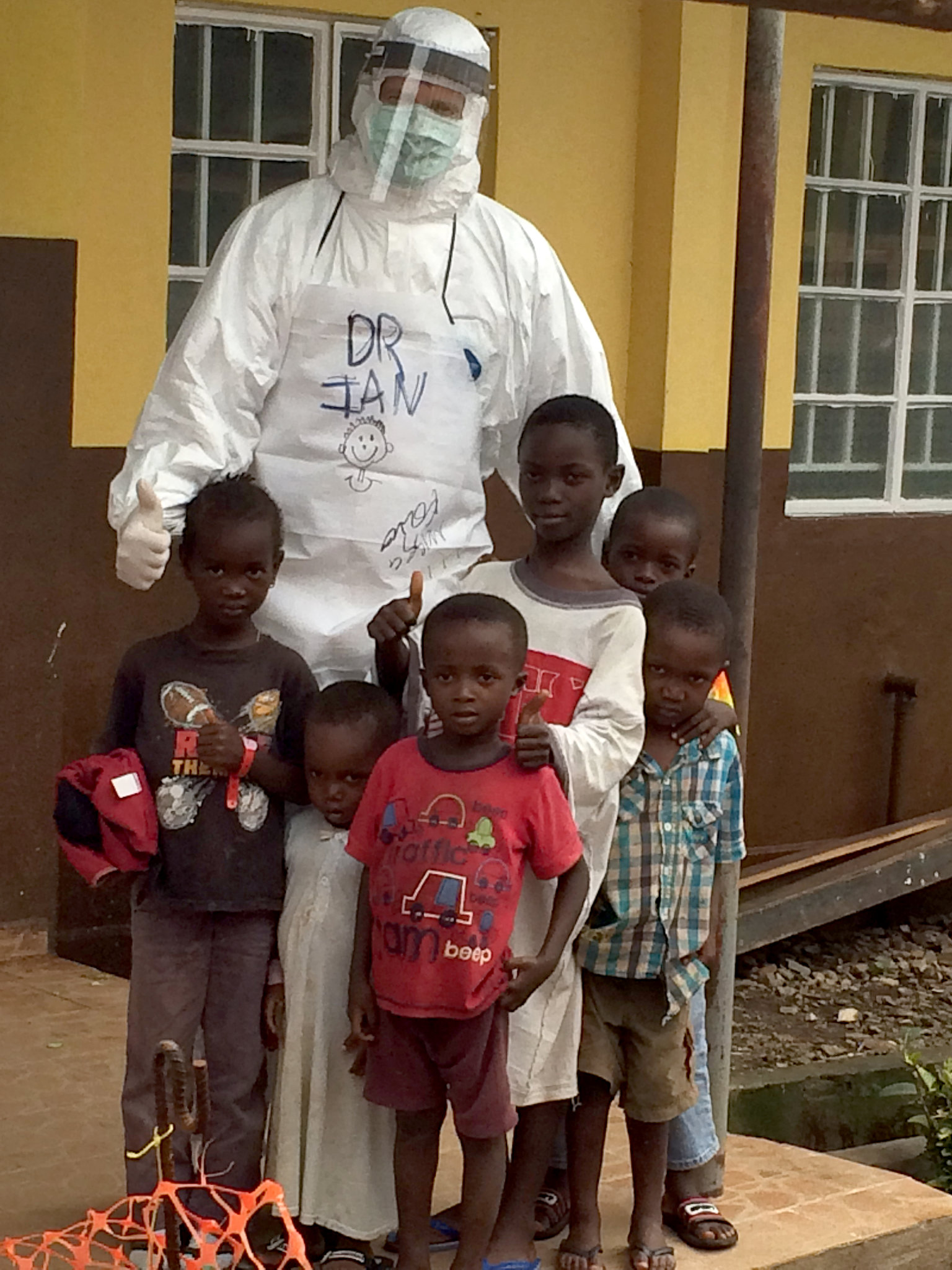
Dr. Ian Crozier with children he helped save in Sierra Leone.

PHOENIX — The medical record, from an Ebola case, made for grim reading, but Dr. Ian Crozier could not put it down. Within days of the first symptom, a headache, the patient was fighting for his life. He became delirious, his heartbeat grew ragged, his blood teemed with the virus, and his lungs, liver and kidneys began to fail.

“It’s a horrible-looking chart,” Dr. Crozier said.

It was his own. Dr. Crozier, 44, contracted the disease in Sierra Leone while treating Ebola patients in the government hospital in Kenema. He was evacuated to Emory University Hospital in Atlanta on Sept. 9, the third American with Ebola to be airlifted there from West Africa. He had a long, agonizing illness, with 40 days in the hospital and dark stretches when his doctors and his family feared he might sustain brain damage or die. His identity was kept secret at his request, to protect his family’s privacy.

via An Ebola Doctor’s Return From the Edge of Death – NYTimes.com.

‘The Sixth Extinction,’ by Elizabeth Kolbert

The resulting rapid warming of both the atmosphere and the ocean, which Kolbert notes has absorbed about one-third of the carbon dioxide we have produced, is wreaking havoc on earth’s delicately balanced ecosystems. It threatens both the web of living species with which we share the planet and the future viability of civilization. “By disrupting these systems,” Kolbert writes, “we’re putting our own survival in danger.”

Continue reading the main story

RELATED COVERAGE

A Conversation With: ‘The Sixth Extinction’ Looks at Human Impact on the EnvironmentFEB. 10, 2014

The earth’s water cycle is being dangerously disturbed, as warmer oceans evaporate more water vapor into the air. Warmer air holds more moisture (there has been an astonishing 4 percent increase in global humidity in just the last 30 years) and funnels it toward landmasses, where it is released in much larger downpours, causing larger and more frequent floods and mudslides.

The extra heat is also absorbed in the top layer of the seas, which makes ocean-­based storms more destructive. Just before Hurricane Sandy, the area of the Atlantic immediately windward from New York City and New Jersey was up to nine degrees warmer than normal. And just before Typhoon Haiyan hit the Philippines, the area of the Pacific from which it drew its energy was about 5.4 degrees above average.

Our oceans, a crucial food source for billions, have become not only warmer but also more acidic than they have been in millions of years. They struggle to absorb excess heat and carbon pollution — which is why, as Kolbert points out, coral reefs might be the first entire ecosystem to go extinct in the modern era.

The same extra heat pulls moisture from soil in drought-prone regions, causing deeper and longer-lasting droughts. The drying of trees and other vegetation leads also to an increase in the frequency and average size of fires.

Food crops are threatened not only by more pests and the disruption of long-­predictable rainy season-dry season patterns, but also by the growing impact of heat stress itself on corn, wheat, rice and other staples.

Earth’s ice-covered regions are melting. The vanishing of the Arctic ice cap is changing the heat absorption at the top of the world, and may be affecting the location of the Northern Hemisphere jet stream and storm tracks and slowing down the movement of storm systems. Meanwhile, the growing loss of ice in Antarctica and Greenland is accelerating sea level rise and threatening low-lying coastal cities and regions.

Viruses, bacteria, disease-carrying species like mosquitoes and ticks, and pest species like bark beetles are now being pushed far beyond their native ranges. Everywhere the intricate interconnections crucial to sustaining life are increasingly being pulled apart.

via ‘The Sixth Extinction,’ by Elizabeth Kolbert – NYTimes.com.

Epidemiology Follow-up 2 • CDC: Flu shot less effective this year because current flu virus has mutated

POSTED 10:53 PM, DECEMBER 3, 2014, BY CNN

(CNN) — This year’s flu vaccine is not as effective against the current strain of the influenza virus because the virus has mutated, the U.S. Centers for Disease Control and Prevention said Wednesday in an advisory to doctors.

The advisory said 52% of the 85 influenza virus samples collected and analyzed from October 1 through November 22 were different than the virus strains included in this year’s vaccine, indicating a mutation, or drift, of the strain.

The most common strain of the virus reported so far this season is influenza A (H3N2). In the past this strain has been linked to higher rates of hospitalization and death, especially for those at high risk for complications, which is usually the very young, the elderly and those with chronic health conditions.

Flu cases on the rise across county

In February a panel of experts decided on 3 strains of the virus to include in this year’s vaccine. The decision is based on common strains circulating around the globe throughout the year. That information is used to predict which strains will be common during the upcoming flu season. Some years the vaccine is a better match to the circulating strains than others.

While the vaccine is not as protective against a mutated strain, it can still decrease the severity of illness caused by the virus. It can also protect against other circulating strains of the virus, which is why the CDC still recommends getting vaccinated.

“The flu is bad, and you want to do anything you can to prevent getting it and to prevent giving it to other people, said Dr. Lisa Thebner, a pediatrician in New York City. “The vaccine isn’t perfect, but it’s the best protection we have for prevention.”

via CDC: Flu shot less effective this year because current flu virus has mutated | FOX5 San Diego – San Diego news, weather, traffic, sports from KSWB.

Epidemiology Unit Follow-Up 1 • San Diego flu cases coming in faster than last year

Dec 03, 2014 4:31 PM PST

Influenza cases around the San Diego region are coming in at a faster rate than last year, county health officials reported Wednesday. A total of 141 lab-confirmed cases have been reported to date this flu season, 86 more than at the same time last year, according to the county Health and Human Services Agency.

No one has died from flu complications thus far, according to the HHSA. Last winter, 70 people died from influenza-related causes. The death toll was 65 the year before.The U.S. Centers for Disease Control and Prevention recommends that everyone 6 months and older get a flu vaccine every year. The vaccine, which health officials say is safe and effective, takes two weeks for immunity to develop.

Vaccination is especially important for people who are at high risk of developing serious complications from influenza, such as those who have chronic medical conditions, are pregnant, elderly, or live with or care for others who are at higher risk. The majority of fatalities involved people who were seniors or already suffering health problems.

The HHSA said this seasons vaccine covers the same strains of influenza as last year because they’re the ones that have been circulating in countries around the world.

Other suggestions to avoid getting sick are washing hands thoroughly and often; using hand sanitizers; staying away from sick people; avoiding touching the eyes, nose, and mouth; cleaning commonly touched surfaces; and staying home and avoiding contact with others if youre sick.

The flu vaccine is available at doctors offices and retail pharmacies. Those without medical insurance can go to a county public health center to get vaccinated. A list of locations is available online at www.sdiz.org or by calling 2-1-1.

via San Diego flu cases coming in faster than last year – KUSI News – San Diego, CA.