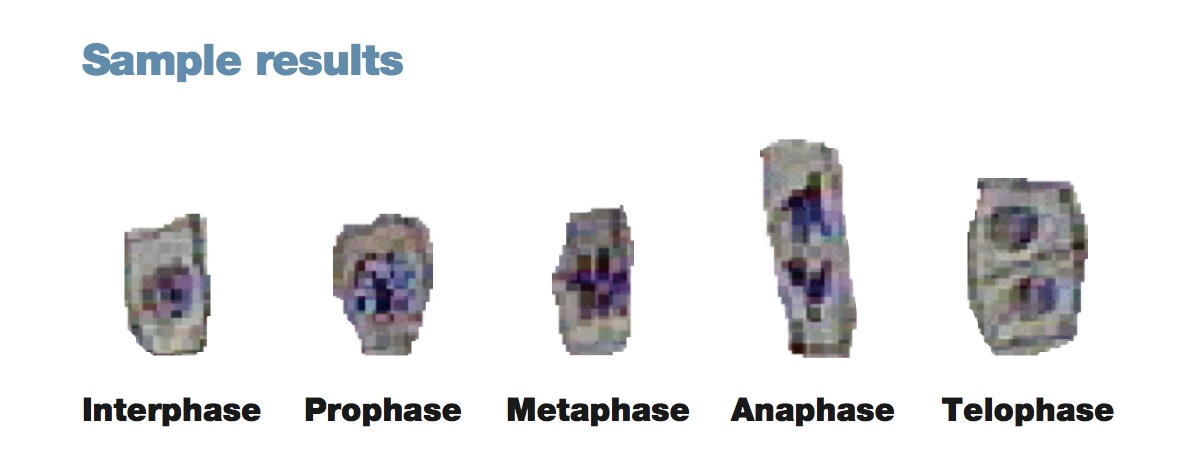
Sample Results (can we do better than this?)
INSTRUCTIONS for EARNING CREDIT (Needs adaptation to current microscopes): Microscope and Cell Division (aka Mitosis)
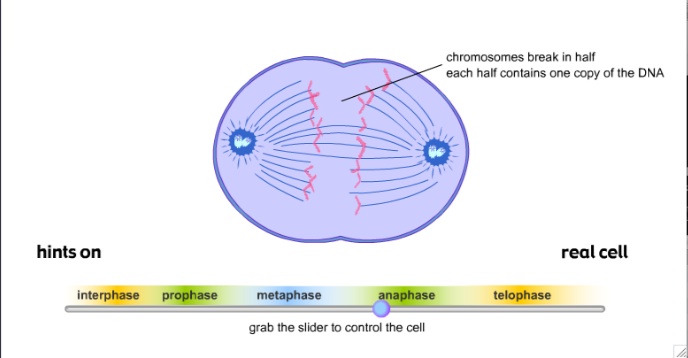

Sample Results (can we do better than this?)
INSTRUCTIONS for EARNING CREDIT (Needs adaptation to current microscopes): Microscope and Cell Division (aka Mitosis)
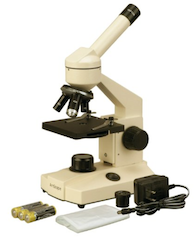
* Learn to use a Stage Optical Microscope, Learn to make slides, Learn to dissect plant specimens for the slide, Learn to make observations *
To earn credit for this project: Use the MICROSCOPE GUIDELINES 2014 to make two color drawings, in your notebook, of each of these plants species at two different magnifications. You must follow the guidelines to receive credit for your observations!
Elodea Plant Cells at:

Onion Plant Cells at:

What is a binomial name? Linneus.
In your drawings, Identify & Be Able to Define:
Demonstrate how to use the Microscope:
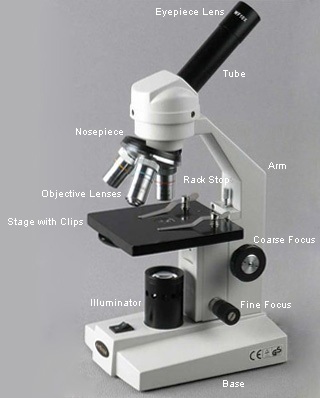
Know History or Microscope, How to Carry, How to Use, Names of Each Part of the Optical Stage Microscope
During that historic period known as the Renaissance, after the “dark” Middle Ages, there occurred the inventions of printing, gunpowder and the mariner’s compass, followed by the discovery of America. Equally remarkable was the invention of the light microscope: an instrument that enables …
Before using a microscope, it is important to know the functions of each part.
Eyepieces: The eyepieces are the lenses at the top that the viewer looks through; they are are usually10X or 15X. To get the total magnification level, multiply the magnification of the eyepiece and the magnification of the objective used (ex: 10X eyepiece * 40X objective = 400X total magnification).
Your application is the most important factor in choosing a microscope. What you need to see and what you want to do with that image will determine what kind of microscope you need. There are two
Basics:
1. When transporting the microscope, carry it close to your body with one hand on the arm and the other …
For Flying Colors Extra Credit: Use either the Celstron Digital microscope,
or the Amscope modified by Mr Doar, to take photos of each plant type and pots LABELED photos to your blog–under Science Category!
SunClocks North America

Uses a person’s OWN SHADOW to tell the correct time
via Customized Interactive Human Sundials – SunClocks North America.

Saskatchewan River Watershed-Diseases travel along water routes and trade routes

One could say that as this disease began its path of diffusion eastward along the overland routes, that it pretty much followed the river banks making its way towards Lake Winnepeg. To remain in an infectious state, it had to travel mostly from person to person, cabin to cabin, encampment to encampment, tipi to tipi. At the time there were a number of Mandan villages situated along the South Saskatchewan. These Mandans had trade relations with other Native American groups south of the Canadian Border down in the Dakotas. Most of the Mandans and their partners resided on the Missouri River or one of its tributaries, such as the Red River. This trade facilitated the diffusion of small pox along these trade routes, So in due time, as the disease made its way eastward towards more settled parts of Canada, the numerous business establishments where Native Americans tended to aggregate assisted it in making its way along the path leading to Hudson Bay. For now (as of 10/2011) there is very little if any evidence suggesting an initial introduction of measles by way of any south to southeastern routes; the population requirements were there, but no documented introduction of measles from Toronto, the Great Lakes, or any of the many former New France settlements could be found.
Once the final destination of this smoldering epidemic was reached, the shoreline of Hudson Bay, this disease stopped because it had reached the end of its routes geographically. Fortunately, the travel across Hudson Bay wasn’t able to spread the disease much beyond the immediate Cree settlements. Even the trip towards the relatively close Severn House, from both directions, seemed to be protected from this contagion.
Caution-graphic photos:
Continue reading
Wary of Attack With Smallpox, U.S. Buys Up a Costly Drug
By DONALD G. McNEIL Jr. Published: March 12, 2013
The United States government is buying enough of a new smallpox medicine to treat two million people in the event of a bioterrorism attack, and took delivery of the first shipment of it last week. But the purchase has set off a debate about the lucrative contract, with some experts saying the government is buying too much of the drug at too high a price.

Lining up for smallpox vaccinations in 1947.
The government is stockpiling a new drug for use if there is a bioterrorism attack.A small company, Siga Technologies, developed the drug in recent years. Whether the $463 million order is a boondoggle or a bargain depends on which expert is talking. The deal will transform the finances of Siga, which is controlled by Ronald O. Perelman, a billionaire financier, philanthropist and takeover specialist.Smallpox was eradicated by 1980, and the only known remaining virus is in government laboratories in the United States and Russia. But there have long been rumors of renegade stocks that could be sprayed in airports or sports stadiums. Experts say the virus could also be re-engineered into existence in a sophisticated genetics lab.
As part of its efforts to prepare for a possible bioterrorism attack, the government is paying more than $200 for each course of treatment.
via U.S. Stockpiles Smallpox Drug in Case of Bioterror Attack – NYTimes.com.
Now that you know a little bit about growing plants, use that knowledge to make our enclosed spaces healthier: Grow these three Oxygen Producing or Air Filtering Plants for the Old Town Academy Learning Lab, Science Lab, 4th Grade, Offices…. or your home!
The Discovery:
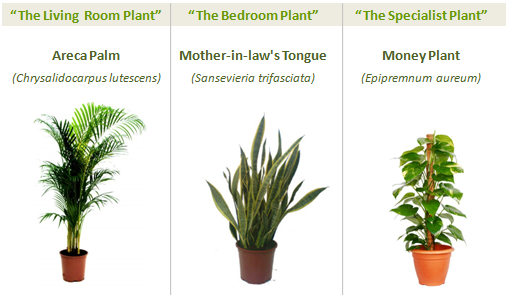
2. Mother-in-law’s Tongue (Sansevieria trifasciata)
How do we know this works?
We have tried and tested these plants for 15 years at Paharpur Business Centre and Software Technology Incubator Park (PBC™ – STIP) in New Delhi, India. It is a 20 year old, 50,000 ft2 building, with over 1,200 plants for 300 building occupants.
PBC™ – STIP is rated the healthiest building in Delhi by the Government of India.* Their study found that there is a 42% probability of increasing blood oxygen by 1% if one is inside the building for 10 hours.
Also, compared to other buildings in Delhi, the incidence of eye irritation reduced by 52%, lower respiratory symptoms by 34%, headaches by 24%, upper respiratory symptoms by 20%, lung impairment by 10-12% and Asthma by 9%. As a result of fewer sick days — employee productivity also increased.
* Study published on September 8, 2008 by The Govt. of India, Central Pollution Control Board and Chittaranjan National Cancer Institute, Kolkata, India
We conducted another experiment and sealed all fresh air and exhaust from the building for 6 weeks and found that that the air quality inside the building was better than outdoors.
We saved over 15% in energy costs as we did not have to inject 15-20 cfm of fresh air in to the building as suggested by ASHRAE – an industry standard.
Check out San Diego’s air quality at http://www.pbcnet.com
By LEONARD ADLEMAN OCT. 15, 2014
LOS ANGELES — ON Oct. 16, 1975, 3-year-old Rahima Banu of Bangladesh became the last human infected with naturally occurring smallpox (variola major). When her immune system killed the last smallpox virus in her body, it also killed the last such smallpox virus in humans. In what is arguably mankind’s greatest achievement, smallpox was eradicated.
Our war with this smallpox virus was brutal. It appears likely that the virus killed about one billion of us. Initially, our only defense was our immune system, but eventually we developed new tools, including vaccination. In the late 1950s, the World Health Organization began responding to outbreaks by vaccinating everyone in the surrounding area to prevent the virus from spreading. By 1975, we had won.
The smallpox virus had only a single host species: us. Other viruses have multiple hosts. For example, some strains of flu live in both humans and pigs, hence “swine flu.” If smallpox had had a second host, eradicating it in humans would have been of little value, since it would have thrived in its second host and later re-emerged in humans.
A few samples of the virus are still kept in special labs: one in the United States and one in Russia. We don’t bother vaccinating against smallpox anymore; if the virus escapes from one of these labs, the war will begin again. Currently, there is debate about whether these samples should be destroyed or kept for scientific purposes.
But the debate should be broadened. Even if we destroy those samples, the war is not over; the smallpox virus has now found a second host. It is not the pig. In fact, it is not even what we think of as a living thing. It is the computer.
via Resurrecting Smallpox? Easier Than You Think – NYTimes.com.


Primary Colors
The human eye is sensitive to a narrow band of electromagnetic radiation that lies in the wavelength range between 400 and 700 nanometers, commonly known as the visible light spectrum. This small span of electromagnetic radiation is the sole source of color. All of the wavelengths present in visible light form colorless white light when they are combined, but can be refracted and dispersed into their individual colors by means of a prism.
The colors red, green, and blue are classically considered the primary colors because they are fundamental to human vision. All other colors of the visible light spectrum can be produced by properly adding different combinations of these three colors. Moreover, adding equal amounts of red, green, and blue light produces white light and, therefore, these colors are also often described as the primary additive colors.
Interactive Java Tutorial
Primary Additive Colors

Explore how the primary additive colors interact with one another to form new colors.
As illustrated by means of the overlapping color circles in Figure 1, if equal portions of green and blue light are added together, the resultant color is cyan. Similarly, equal portions of green and red light produce the color yellow, and equal portions of red and blue light yield the color magenta. The colors cyan, magenta, and yellow are commonly termed the complementary colors because each complements one of the primary colors, meaning that the two colors can combine to create white light. For instance, yellow (red plus green) is the complement of blue because when the two colors are added together white light is produced. In the same way cyan (green plus blue) is the complement of red, and magenta (red plus blue) is the complement of green light.
via Molecular Expressions: Science, Optics, and You: Light and Color – Primary Colors.
To understand blend modes, you need to know a little about color. Color is light, and likewise, light is made up of many colors. Objects absorb or reflect these light waves. Our eyes perceive these wavelengths as color. Let’s start with the color wheel.

The COLOR WHEEL has 12 segments that consist of primary, secondary and tertiary hues, or colors.
The three PRIMARY colors are RED, YELLOW, and BLUE. They form a triangle on the wheel. These colors cannot be mixed by combining any other colors. They are indicated on the color wheel with a P.
The three SECONDARY colors of ORANGE, VIOLET, and GREEN (marked on the chart by an S) are created by mixing equal parts of the primary colors they fall in between; ie, VIOLET is the secondary color produced by mixing equal parts of RED and BLUE.
The TERTIARY colors are the colors that result from mixing the primary and secondary colors on either side of them: ie, mixing the secondary color ORANGE with the primary color RED results in red-orange. These colors are marked on the color wheel with a T.
Using the color wheel you can determine color schemes fpr balance and harmony in your artwork, webpages, desktop publishing designs or home decorating.
Hue: Hue refers to the color…red, blue, etc.
The primary, secondary, and tertiary colors, or hues, are these colors at their full saturation or brightness; that is, there, there is no white, gray, or black added.
Value: the lightness or darkness of a color, or the relative amount (percentage) of white or black in a hue.
Luminosity, or Lightness: A measure of the amount of light reflected from a hue. Those hues with a high content of white have a higher luminance, or value. Continue reading
Geology of Dike Rock Tide Pools (North of Scripps Pier)
“This tidepool area is interesting for several reasons. First, the geology is unique. Most of the rocks in the coastal areas of Southern California represent ancient beach deposits and are largely sandstones and siltstones. The layering is obvious in the cliffs on either side of the tide pool. These rocks are about 40 to 50 million years old.
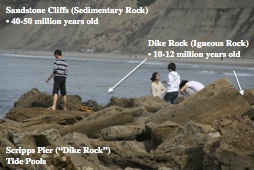
“But if you look carefully at the main rock bench that extends out into the ocean and forms the foundation for the tide pools, you’ll see that it is not the same rock that makes up the cliffs . It is darker and harder, and looks similar to the lava rock common on volcanic islands. This vertical outcrop, or “Dike,” was formed from hot, molten rockthat forced its way up through a crack in the layered beach rocks of the cliffs about 10 to 12 millions years ago (Miocene Epoch). This geologic feature is called a dike, hence the name “Dike Rock,” one of the most prominent features of these tide pools.”

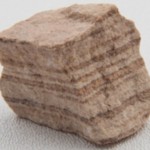

Igneous (from Latin igneus: “fire”): rocks formed from lava or magma (underground molten rock) Continue reading